
Currently Empty: $0.00

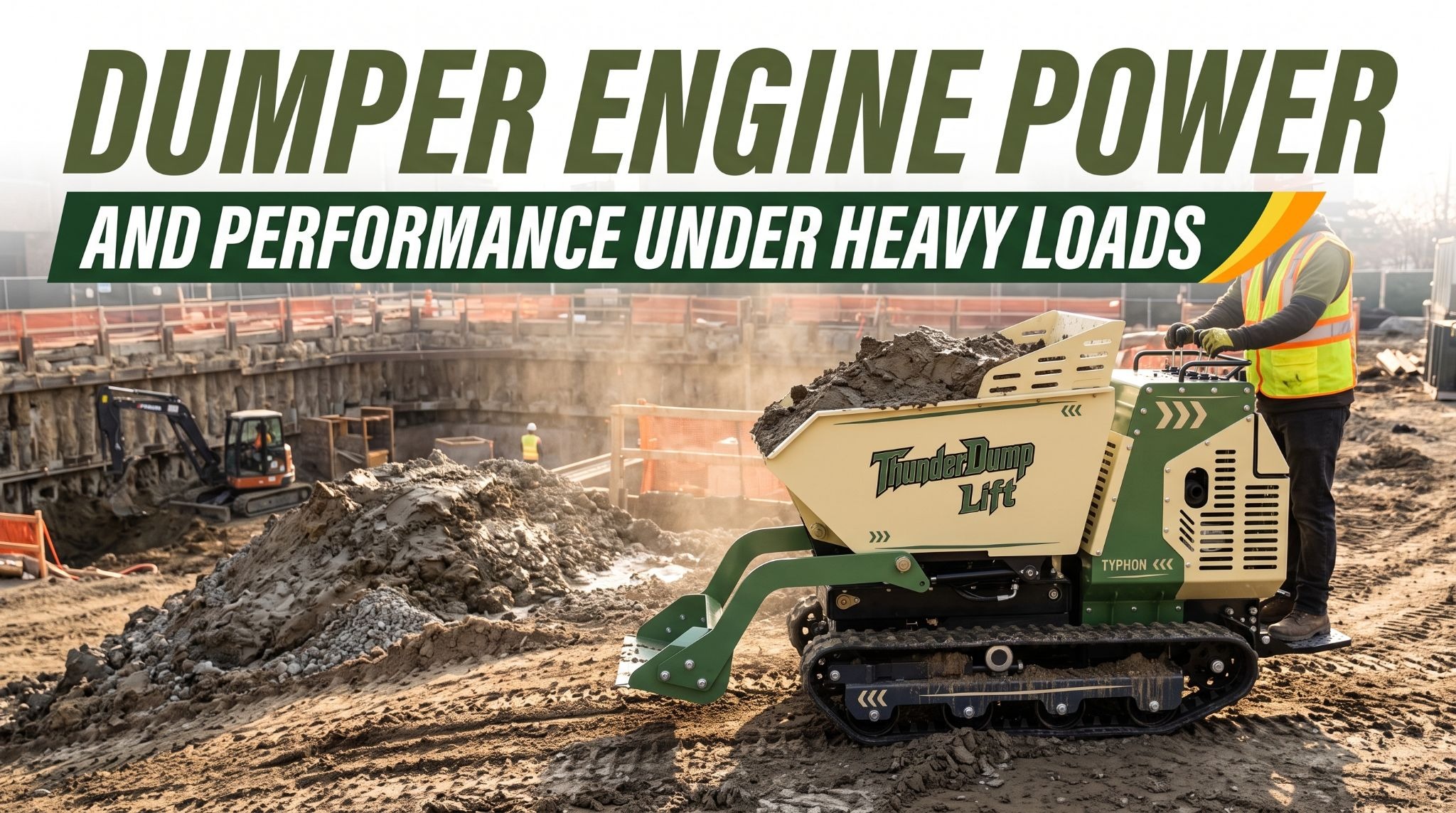
Dumper Engine Power and Performance Under Heavy Loads
Moving heavy excavated material across a construction site can put significant demands on a dumper’s engine and drivetrain. Wet clay, a soft haul ramp, a full payload, and an uphill route can quickly reduce travel speed and increase engine load. When the machine has to carry smaller loads just to keep moving, more trips are needed and the overall excavation schedule can slow down.
Engine power and torque affect how effectively a dumper moves under load. Payload weight, slope, ground resistance, travel distance, and surface conditions all influence the power required during hauling. Cooling capacity and fuel consumption also become important when the machine works for long periods under heavy load, particularly in demanding conditions.
Matching the dumper’s capabilities to the actual haul route helps create more realistic production cycles. Contractors should consider payload, engine power, torque, slope, ground conditions, cooling performance, and expected travel distance when evaluating equipment. Planning around these factors can help maintain steady material movement while avoiding excessive strain and unnecessary trips.
Engine Power for Loaded Travel
A loaded dumper has to move both its own weight and the material in the skip or bed, so engine power affects how easily it starts, accelerates, and travels across the site. Engine output is usually rated in horsepower or kilowatts and reflects the amount of work the engine can deliver over time. In practical use, sufficient power helps the dumper accelerate after loading, maintain a steady travel speed along the haul route, and respond predictably when the surface, grade, or direction changes. When power is not well matched to the load and terrain, the machine may slow down, work harder, and take longer to complete each cycle.
Engine power should be considered together with the drivetrain rather than viewed as a standalone number. Transmission type, gearing, and the hydrostatic or mechanical drive system determine how effectively engine output reaches the ground. A machine with adequate power but an unsuitable drivetrain may still perform poorly under heavy loads or difficult ground conditions. When comparing dumpers, consider engine power alongside payload, operating weight, drive system, terrain, and typical haul distances to determine whether the machine can maintain the performance your work requires.
Key takeaway: A loaded dumper needs enough engine power to move its combined machine and payload weight, supporting acceleration and steady travel while carrying heavy material.
Torque During Demanding Work
Power and torque are related, but they describe different aspects of engine performance. Torque is the engine’s turning force and becomes especially important when a dumper must keep moving against resistance. A loaded machine needs more pulling force when climbing slopes, crossing ruts, loose fill, or mud, starting from a standstill, and making frequent stops and direction changes on busy jobsites. Engines that deliver strong torque at lower speeds can handle these conditions more effectively, helping the dumper maintain controlled movement without requiring excessive engine speed.
The drivetrain also affects how much torque reaches the wheels or tracks because gearing can multiply the engine’s available torque. This is why the correct gear or travel range matters when carrying heavy loads or working on difficult ground. Dump height also matters when positioning the dumper to discharge material into trucks, containers, or elevated areas, as the machine must provide enough clearance for the intended dumping point. Use low range or the setting recommended by the manufacturer for steep grades, soft surfaces, and heavy loads, and avoid forcing the machine when it has little forward movement despite high engine speed. Considering engine torque, drivetrain performance, and dump height together gives a better indication of how the dumper will perform under real working conditions.
Key takeaway: Torque helps a loaded dumper keep moving under resistance, which matters most on slopes, rough surfaces, and areas that require frequent speed changes.
Performance on Slopes
Slopes increase the demands on a dumper because gravity, payload weight, traction, and drivetrain performance all affect how the machine travels. A loaded dumper may perform differently on an incline than on flat ground, while wet, loose, or soft surfaces can further reduce traction and increase the effort required to move safely.
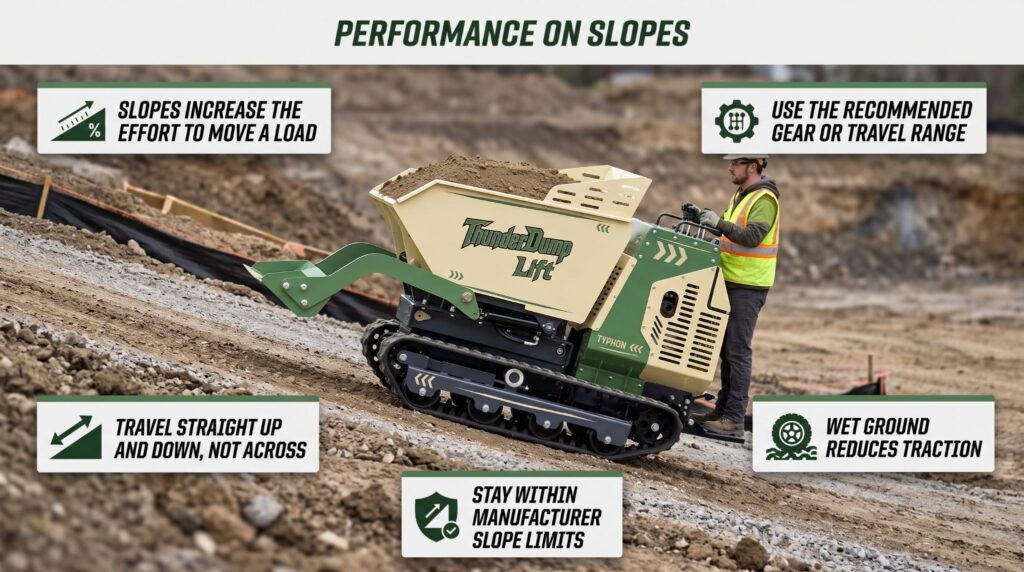
- Engine Performance: Power and torque help the dumper maintain controlled movement and speed when traveling uphill.
- Drivetrain & Traction: Gearing and the drive system determine how effectively power reaches the ground on a grade.
- Payload Weight: Heavier loads increase travel demands and can affect the machine’s center of gravity on slopes.
- Ground Conditions: Wet, loose, or soft surfaces can reduce traction and increase rolling resistance during travel.
- Slope Safety: Follow manufacturer limits, travel direction, and load guidance while avoiding sharp turns or cross-slope travel.
Key takeaway: Inclines increase the effort needed to move a loaded dumper, and engine performance, drivetrain design, payload, and ground conditions all influence how well it travels uphill.
Heavy Loads and Cooling
An engine working hard produces more heat. Continuous heavy-load operation, especially on long cycles, slopes, and soft ground, can push operating temperatures higher than lighter work does. Hot weather and dusty conditions add to that demand.
A properly maintained cooling system manages this heat so the engine stays within its designed temperature range. The radiator, coolant, fan, and hoses all share the work. On machines with hydrostatic drive, a hydraulic oil cooler also helps control the heat produced by the drive system.
Cooling performance depends on clean surfaces and clear airflow. Dust, mud, and debris collect on radiator and cooler fins during haul work and act like insulation. Inspect and clean cooling surfaces regularly, check coolant levels with the engine cool, and inspect hoses and belts for wear. Watch the temperature gauge or warning light throughout the shift. If temperatures rise, ease the workload, allow the engine to idle so it can cool, and check for blocked airflow. Never open a hot radiator cap, since pressurized coolant can cause serious burns.
Key takeaway: Continuous heavy-load operation increases engine heat, so a properly maintained cooling system is essential to manage operating temperature during extended transport cycles.
Matching Power to Jobsite Work
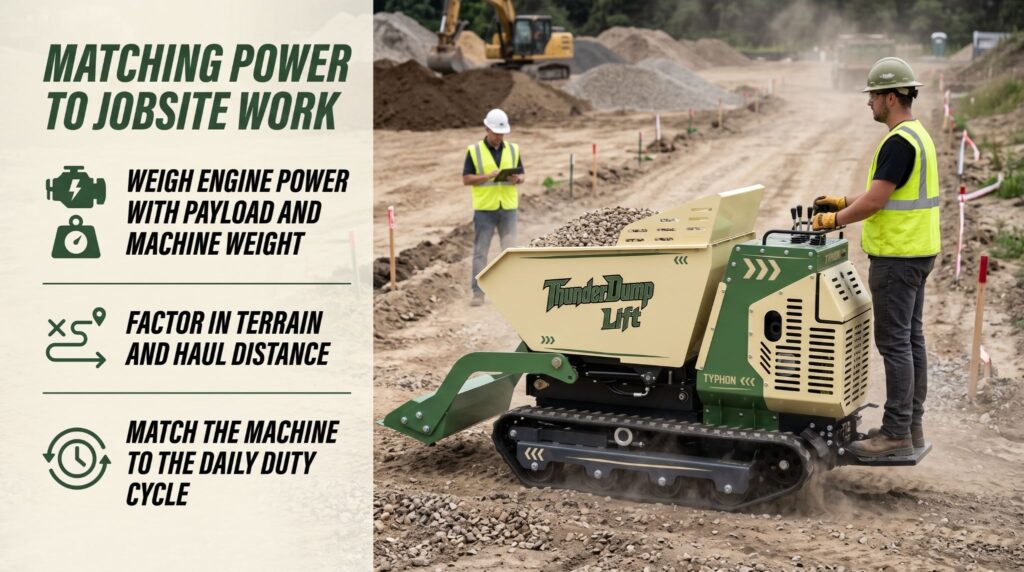
Engine power is important, but it should be evaluated alongside the other specifications that determine how a dumper will perform. Payload affects how much material the machine carries on each trip, while machine weight determines how much mass the engine must move whether the dumper is loaded or empty. Terrain also matters because slopes, soft ground, and rough surfaces increase the effort required to travel. Consider the distance of each haul, how often the machine accelerates and stops, and the duty cycle, including how many hours it will operate under load. Site access is another practical factor, since gate widths, ramps, and tight working areas may limit the machine’s overall size.
The right combination depends on the job. A smaller dumper with moderate power may work well for short, flat hauls on restricted residential sites, while longer routes, steep ramps, and dense materials may require greater capacity and power. The goal is to match the machine to the actual workload rather than choosing the highest engine rating available. Before selecting a dumper, compare payload, operating weight, terrain, haul distance, duty cycle, and site access, and discuss your working conditions with the equipment supplier if the specifications are unclear.
Key takeaway: Consider engine power alongside payload, machine weight, terrain, travel distance, and duty cycle so the dumper can perform transport work efficiently without relying on power alone.
Fuel Use Under Load
Fuel consumption generally increases as engine workload rises. A dumper carrying heavy loads up a ramp will use more fuel than the same machine moving lighter material across level ground. Repeated heavy loads, long travel distances, steep grades, frequent acceleration, and soft or rough surfaces all increase fuel demand because the engine must work harder or run for longer. Poor ground conditions can add rolling resistance, while stop-and-go travel requires more energy than maintaining a steady speed. These factors can have a noticeable effect on fuel use over a full workday.
Fuel consumption can be managed without reducing productivity by planning efficient haul routes and keeping travel surfaces firm and well maintained. Load consistently within the machine’s rated capacity rather than alternating between light and overloaded trips, avoid unnecessary idling between cycles, and maintain the air filter, fuel system, and engine according to the manufacturer’s schedule. Tracking fuel consumed against the amount of material moved can also provide a useful measure of efficiency and help contractors compare different routes, machines, and operating practices over time.
Key takeaway: Engine workload drives fuel consumption, and repeated heavy loads, long travel distances, steep terrain, and frequent acceleration all increase fuel demand.
Conclusion
Engine power helps a dumper accelerate and move its combined machine and payload, while torque supports travel against resistance on slopes, rough ground, and changing conditions. Loaded travel can increase engine heat and fuel consumption, making cooling system condition, route planning, payload, and duty cycle important factors in overall performance. Before operation, operators should check engine oil, coolant, hydraulic fluid, fuel, radiator and cooler condition, hoses, belts, tires or tracks, brakes, and steering. Haul routes should be assessed for slopes and surface conditions, with loaded travel kept within manufacturer limits and practical routes planned between loading and dumping points. Evaluating power alongside payload, terrain, cooling, fuel use, and travel requirements provides a better basis for matching dumper performance to the jobsite.
Frequently Asked Questions
Why does engine power matter on a dumper?
Engine power determines how effectively a dumper can move its own weight together with the payload. Adequate power supports acceleration, steady travel, and climbing slopes while carrying heavy materials. It also helps maintain performance when the machine operates on rough or demanding terrain.
Does a heavy payload affect engine performance?
Yes. A heavier payload increases the workload on the engine and drivetrain because the machine must move more weight. The effect becomes more noticeable when traveling uphill, crossing soft ground, or operating on uneven terrain. Staying within the dumper’s rated payload helps maintain performance and reduce unnecessary strain.
Why is torque important for a loaded dumper?
Torque helps a dumper maintain movement when resistance increases. This is especially important when climbing slopes, traveling over rough or soft ground, or pulling away from a stop with a full load. Sufficient torque allows the machine to move the payload steadily without placing excessive strain on the drivetrain.
Can heavy loads increase fuel consumption?
Yes. Carrying heavier loads generally requires more engine and drivetrain effort, which can increase fuel consumption. Fuel use can rise further during frequent acceleration, uphill travel, or operation on difficult terrain. Keeping loads within the rated capacity and planning efficient travel routes can help control fuel use.
