Currently Empty: $0.00
How Daily Skid Steer Maintenance Supports Reliable Operation
Starting a busy landscaping shift without a walkaround can allow small problems on a skid steer to go unnoticed. A hydraulic hose may already be showing signs of wear or a slow leak before the machine is put to work. As operating hours build, that minor defect can develop into a larger failure that stops the skid steer and delays the crew.
A pre-operation inspection gives operators a chance to identify these issues before they affect the workday. Checking hydraulic hoses, fittings, fluid levels, lift arms, tires or tracks, attachments, and other visible components can reveal leaks, damage, or unusual wear. Even a brief inspection can provide useful information about the skid steer’s condition before productive work begins.
Taking a few minutes before each shift can help prevent avoidable downtime. Finding a worn hose or developing leak early allows the issue to be addressed before it causes an equipment stoppage. Consistent walkarounds, combined with scheduled maintenance, help keep the skid steer ready for grading, backfilling, and other daily tasks.
Start With a Walkaround Inspection
The walkaround is the foundation of every daily check. Before starting the engine, walk fully around the machine and look closely at its condition. This gives you a clear view of obvious problems while the skid steer is still parked and cool.
Focus on the issues that most often lead to downtime. Look for fresh fluid leaks under the machine and around the engine compartment. Check for loose components, missing hardware, and damaged hoses. Examine tires or tracks for visible wear or damage. Clear away debris that has built up around the engine, hydraulic lines, pivot points, and other important areas.
Early detection is what makes the walkaround valuable. A drip, a loose bolt, or a scuffed hose is far easier to address in the yard than halfway through a demanding shift. Once the exterior looks sound, the next step is confirming the engine has the fluids it needs.
Key takeaway: A walkaround before starting the engine helps you spot leaks, loose components, damaged hoses, worn tires or tracks, and debris early, when problems are easier to address.
Check Engine Fluids
Engine fluids keep the machine running as designed. Engine oil lubricates moving parts and reduces wear. Coolant carries heat away from the engine. Other required fluids support systems throughout the machine. When any of them runs low, performance and component life can suffer.
Low fluid levels carry real consequences during demanding work. Insufficient oil can increase internal wear. Low coolant can contribute to overheating, especially during heavy digging, lifting, or long hours in warm weather. Both problems tend to build quietly until they cause a breakdown.
Check fluid levels according to the manufacturer’s maintenance schedule, and do so with the machine parked on level ground so readings are accurate. Use only the fluids the manufacturer specifies. If a level drops noticeably from one day to the next, look for the cause instead of simply topping it off.
Key takeaway: Engine oil, coolant, and other required fluids support normal operation, and checking them on the manufacturer’s schedule helps prevent excess wear and overheating.
Inspect Hydraulic Components
The hydraulic system powers many of a skid steer’s most important functions. Lifting, tilting, attachment operation, and auxiliary hydraulics all depend on it. Because the system runs under high pressure, even minor damage can quickly affect performance.
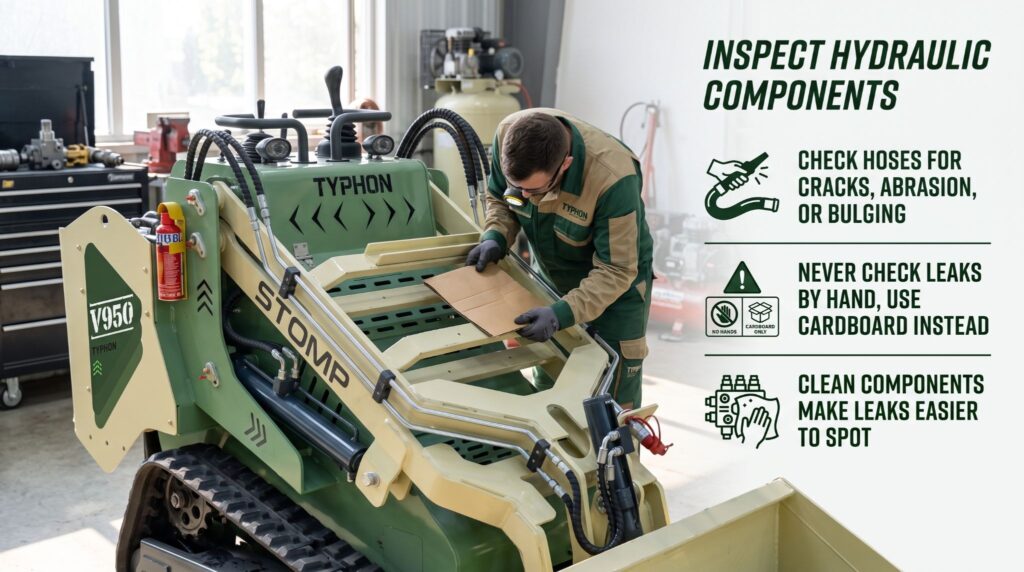
Look carefully at hoses, fittings, and cylinders during every inspection. Watch for hoses that are cracked, abraded, kinked, or bulging. Check fittings for leaks or dampness. Note any unusual fluid loss or wet spots on the machine or ground. Never check for leaks by running your hand along a pressurized hose, since escaping hydraulic fluid can cause serious injury. Use a piece of cardboard or follow the manufacturer’s recommended method instead.
Cleanliness matters too. Keeping hydraulic components free of heavy dirt makes leaks easier to see and helps protect connections from contamination. Well-maintained hydraulics deliver consistent, predictable machine response, which supports both productivity and precise control.
Key takeaway: Hydraulics power lifting, attachment operation, and auxiliary functions, so inspect for damaged hoses, leaking fittings, and unusual fluid loss, and keep components clean and properly maintained.
Keep the Cooling Area Clean
Outdoor work exposes a skid steer to dust, grass, dirt, leaves, and other airborne debris. Much of it gets pulled toward the cooling system, where it can pack into radiator and cooler fins over the course of a shift.
That buildup restricts airflow. When air cannot move freely through the cooling system, the machine has a harder time removing heat. The effect is most noticeable during heavy operation, such as sustained digging or running demanding hydraulic attachments, when the engine and hydraulic system generate the most heat.
Regular cleaning keeps airflow open and reduces unnecessary heat buildup. Check the cooling area during the daily inspection and clean it using the method the manufacturer recommends. On especially dusty or grassy jobs, a midday check may be worthwhile.
Key takeaway: Debris collected around the cooling system restricts airflow and makes heat removal harder, so regular cleaning helps maintain airflow and prevent unnecessary heat buildup.
Examine Tires or Tracks
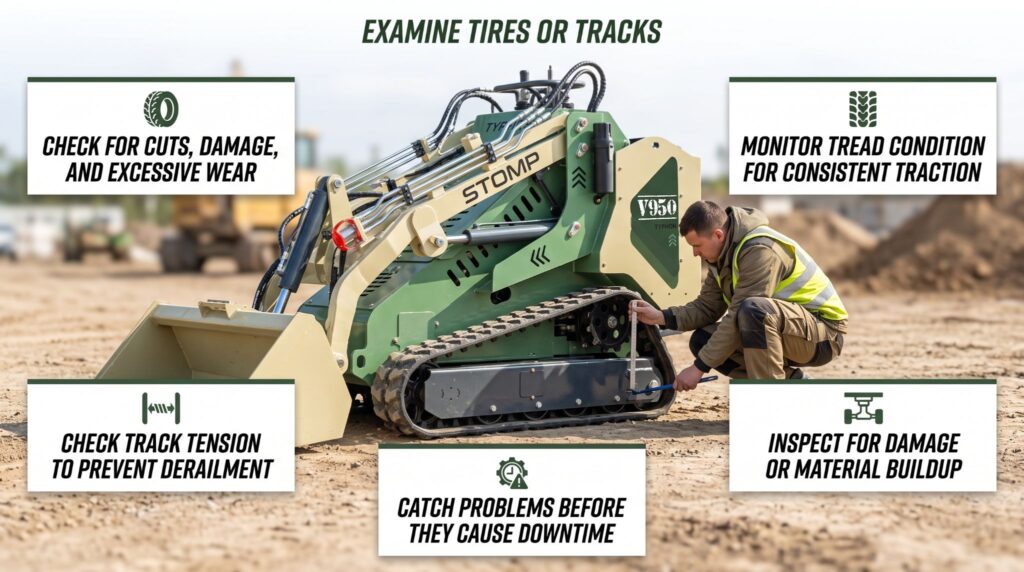
Tires and tracks support the machine’s full weight while handling the stress of travel, turning, and uneven ground. Because they remain in constant contact with the working surface, they are exposed to regular wear and should be included in every pre-operation inspection.
The inspection should match the machine design. Wheeled skid steers require checks of tire condition, tread, cuts, and inflation according to the manufacturer’s guidance. Tracked machines need attention to track condition, tension, undercarriage components, and packed material. Finding problems early gives operators time to arrange repairs before a damaged tire or loose track causes unexpected downtime.
- Tire Condition: Check for cuts, damage, excessive wear, and other visible problems.
- Tread Wear: Monitor tread condition to support consistent traction and machine movement.
- Track Tension: Check tracked machines for proper tension to help prevent excessive wear or track derailment.
- Undercarriage Inspection: Look for damage, wear, or material buildup around the track and undercarriage.
- Early Problem Detection: Identify issues during the pre-operation check before they develop into unexpected downtime.
Key takeaway: Tires and tracks wear constantly during travel and turning, so check condition, tension, and damage according to the machine design to prevent unexpected downtime.
Review the Attachment and Safety Equipment
A complete inspection covers more than the engine and hydraulic system. Attachments do the actual work, and safety equipment protects the operator and everyone nearby. Both deserve the same attention as the machine itself.
Inspect each attachment before use. Look for cracks, bent components, and worn connection points. Check hydraulic couplers for damage or leaks, and confirm hydraulic lines are secure and properly routed. Examine cutting edges, teeth, and other working components for excessive wear. Make sure the attachment is fully and correctly locked to the quick coupler before operating.
Then turn to safety equipment. Confirm the seat belt latches and releases properly. Test lights, alarms, and the backup alarm where equipped. Check mirrors for position and clarity, and verify that controls and safety interlocks function as intended. These checks take only a minute but protect against serious risk.
Key takeaway: Inspect attachments for cracks, worn connections, and damaged couplers, and check seat belts, lights, alarms, mirrors, and controls for a complete daily inspection.
Conclusion
Daily skid steer maintenance helps identify developing problems before they cause downtime or affect machine performance. A pre-start walkaround should check for leaks, loose components, damaged hoses, and debris, followed by inspection of engine oil, coolant, and other required fluids according to the manufacturer’s schedule. Hydraulic hoses, fittings, and cylinders should be checked for damage or fluid loss, while radiators, coolers, and surrounding areas should remain clear to maintain airflow and control operating temperature. Tires should be inspected for condition, inflation, and damage, while tracks require checks for wear, damage, and proper tension. Attachments, couplers, hydraulic connections, seat belts, lights, alarms, mirrors, and controls should also be inspected before work begins. Recording inspection findings and addressing identified problems before operation helps establish a consistent maintenance routine, reduce unexpected downtime, and keep the skid steer ready for daily work.
Frequently Asked Questions
How often should a skid steer be inspected?
A basic inspection should be completed before daily operation, while scheduled maintenance should follow the manufacturer’s recommendations. The daily check should cover leaks, damage, fluid levels, hydraulic components, cooling areas, tires or tracks, attachments, and safety equipment. Scheduled service includes deeper tasks such as filter changes, fluid replacement, and lubrication based on operating hours. Dusty, muddy, or demanding conditions may require more frequent attention. Keeping inspection records also helps identify recurring issues and plan service before downtime occurs.
Why should hydraulic hoses be checked regularly?
Hydraulic hoses operate under high pressure and power lifting, tilting, attachments, and auxiliary functions. Cracks, abrasion, bulging, or leaks can reduce performance, cause fluid loss, or lead to sudden failure. Regular inspections help identify damage before a hose fails during work. Use a safe method such as cardboard to check for leaks rather than your hands, and replace worn hoses before they become a larger problem.
Can a dirty cooling system affect skid steer operation?
Yes. Dust, grass, leaves, and dirt can restrict airflow through radiator and cooler fins, reducing the system’s ability to remove heat. The effect becomes more noticeable during heavy digging or demanding hydraulic attachment work. Excessive heat can reduce performance and place additional stress on the engine and hydraulic system. Inspect and clean the cooling area regularly using the manufacturer’s recommended method to maintain proper airflow.
Should attachments be inspected separately?
Yes. Check attachment frames, mounting points, couplers, hydraulic lines, cutting edges, and teeth before use. Look for cracks, bends, wear, leaks, or loose connections that could affect performance or safety. Confirm hydraulic couplers are clean and hoses are secure and properly routed. Most importantly, make sure the attachment is fully locked into the quick coupler every time it is installed.