Currently Empty: $0.00

How Hydraulic Pressure Affects Bucket and Lift Performance
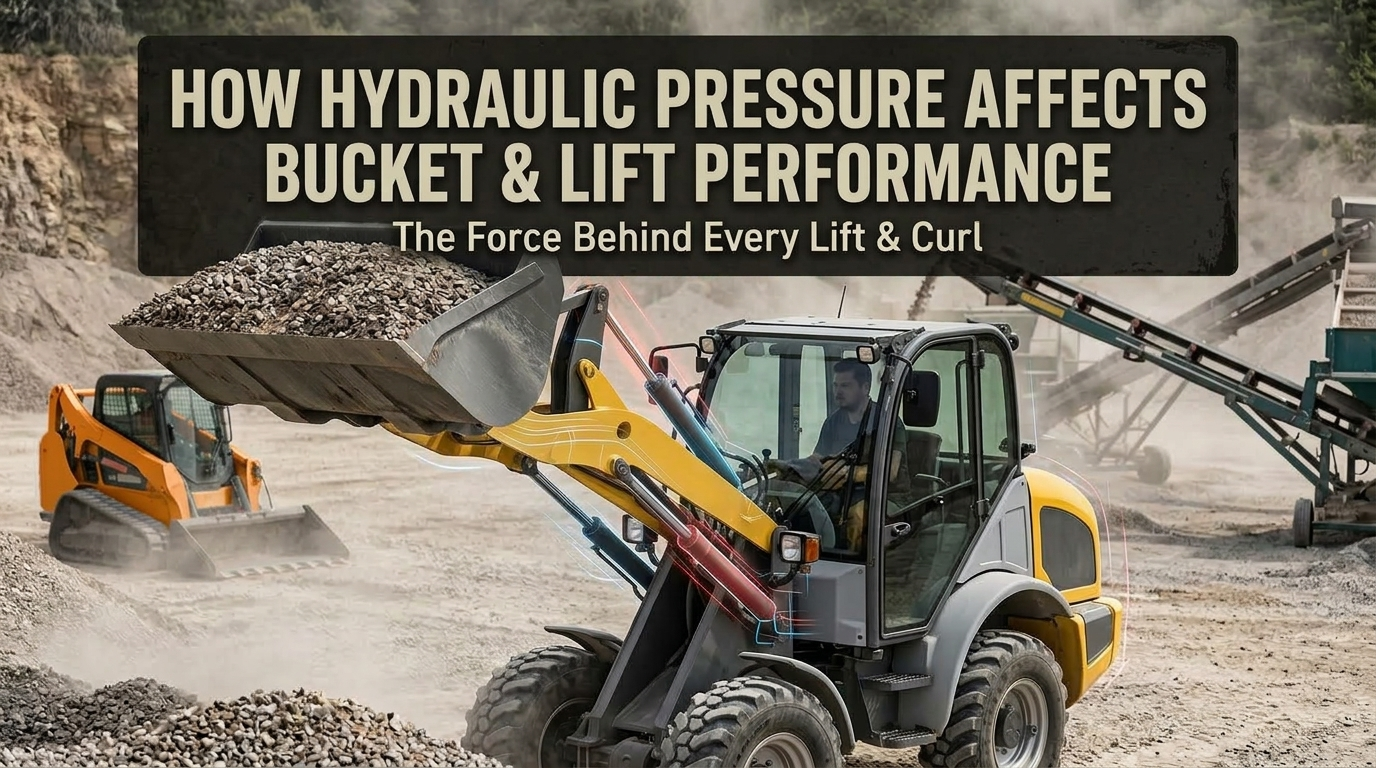
Every time a loader raises a full bucket or curls into a stubborn pile, hydraulic pressure is doing the work. It is the force behind each lift, each curl, and each dump, and it largely decides whether the machine handles heavy material with confidence or strains against it. Operators notice it when a bucket digs cleanly into packed gravel. Fleet managers notice it when a machine that once lifted easily starts to slow down. Understanding how hydraulic pressure affects bucket and lift performance helps you choose the right equipment, spot problems early, and keep your loaders working at full capability.
This guide covers five practical areas. You will learn what hydraulic pressure is and how it works inside a loader, how pressure relates to lifting force, why it matters for bucket breakout performance, what causes pressure loss and how it reduces performance, and how pressure and hydraulic flow work together. The goal is a clear, dependable understanding of the system that powers every loading cycle.
Understanding Hydraulic Pressure
Hydraulic pressure is the force that allows hydraulic cylinders and other components to perform work. Inside a loader, a pump draws fluid from the reservoir and pushes it through hoses, valves, and lines toward the cylinders. When that fluid meets resistance, such as the weight of a raised bucket or the density of material in a pile, pressure builds. That pressure acts on the face of each cylinder piston, and the piston converts it into a straight push or pull. Every movement of the lift arms and bucket begins with this conversion of fluid pressure into mechanical force.
In a loader, hydraulic pressure directly influences the force available for lifting and operating the bucket. The lift cylinders raise and lower the loader arms, while the tilt or bucket cylinders curl the bucket back to hold material and roll it forward to dump. Both sets of cylinders depend on the pressure the system can deliver. When pressure is adequate, the arms rise steadily under load and the bucket curls firmly through material. When pressure falls short, the same motions become labored, and the machine struggles with tasks it was built to handle.
Pressure is typically measured in pounds per square inch (psi) or bar, and every loader’s hydraulic system is designed around a specific maximum working pressure. A relief valve protects the system by limiting pressure to that designed level, returning excess fluid to the reservoir instead of letting it strain hoses, seals, and cylinders. This means the pressure rating on a specification sheet represents a carefully engineered ceiling, not a number that can be raised at will. Knowing how pressure is created, where it acts, and how the system controls it gives you a solid foundation for evaluating bucket and lift performance, recognizing trouble early, and comparing machines with confidence.
Hydraulic Pressure and Lifting Force
Higher available hydraulic pressure can provide greater cylinder force when the system is operating within its designed limits. The relationship is straightforward: cylinder force equals pressure multiplied by the area of the piston it acts on. Consider a lift cylinder with a 5-inch bore, which gives a piston area of roughly 19.6 square inches. At 3,000 psi, that cylinder can produce close to 59,000 pounds of theoretical force. Raise the available pressure and the force rises with it, which is why pressure plays such a central role in how much a loader can lift.
This force affects how effectively the machine can lift and handle heavy loads. A loader with adequate pressure raises a full bucket of wet sand, rock, or aggregate smoothly through its full lift arc, holds the load steady at height, and places it accurately into a truck or hopper. A machine working near the edge of its available force may lift slowly, hesitate partway through the arc, or struggle to raise dense material to full height. Lifting force also shapes how the machine performs across the entire cycle, since a loader that lifts decisively completes each pass faster and with more control.
That said, pressure is only one part of lifting capability. Several factors work together to determine how much a loader can safely lift:
- Cylinder size, since a larger piston area produces more force at the same pressure
- Lift arm geometry, which affects how cylinder force translates into force at the bucket through the lift arc
- Machine weight and counterweight, which keep the loader stable as the load rises
- Rated operating capacity and tipping load, which set the safe limits the manufacturer has engineered into the machine
The phrase “within its designed limits” matters here. Hoses, seals, pins, and structural components are built for a specific pressure range, and exceeding it risks leaks, component damage, and unsafe operation rather than delivering useful extra force. The right approach is to choose a loader whose pressure, cylinder sizing, and rated capacity match the loads you handle every day.
Bucket Breakout Performance
Bucket breakout force is important when digging into compacted soil, gravel, or other dense materials. Breakout force describes the maximum upward force the bucket can exert at its cutting edge when the tilt cylinders curl it back or the lift cylinders raise it from the pile. It is the force that pries material loose, fills the bucket, and separates the load from the face. In loose, free-flowing material, breakout demands are modest. In packed clay, frozen ground, blasted rock, or tightly settled gravel, the bucket meets serious resistance, and breakout force becomes one of the most important factors in how productive the loader is.
Adequate hydraulic pressure helps the cylinders generate the force needed to curl and break material out of the pile. When the operator drives the bucket into the face and begins to curl, pressure builds rapidly in the tilt cylinders as they push against the weight and cohesion of the material. If the system can supply enough pressure, the cylinders overcome that resistance and the bucket rolls back through the pile, filling cleanly. If pressure is insufficient, the curl stalls, the bucket fills only partially, and the operator is forced to reposition, crowd harder, or make extra passes to gather a full load.
Those extra movements add up quickly. A loader that stalls in the pile even a few times per hour wastes fuel, increases tire wear from spinning and crowding, and delivers fewer full buckets over the course of a shift. Partially filled buckets also mean trucks take longer to load, which slows the entire operation downstream. Strong breakout performance, supported by adequate pressure, lets the operator fill the bucket in a single smooth motion and move on to the next cycle.
Breakout force also depends on bucket design, linkage geometry, and tilt cylinder size, so pressure should be evaluated alongside these features. When you compare loaders for digging in dense material, look at the published breakout force together with the system pressure to understand how the machine will perform at the pile face.
Pressure Loss and Reduced Performance
Leaks, worn components, clogged filters, or other hydraulic system problems can cause pressure to fall below the intended operating level. Pressure loss often develops gradually, so operators may adapt to a slowly weakening machine without realizing how much capability has been lost. Understanding the common causes makes it easier to catch the problem before it affects productivity or leads to a costly failure.
The most frequent sources of pressure loss include:
- External leaks from damaged hoses, loose fittings, or cracked lines, which allow fluid and pressure to escape
- Internal leaks past worn cylinder seals or control valve spools, where fluid bypasses the component instead of doing work
- Worn hydraulic pumps, which lose efficiency over time and can no longer build full pressure under load
- Clogged filters, which restrict flow and can starve the pump or force fluid through bypass valves unfiltered
- Low or contaminated fluid, since air, water, or debris in the system reduce its ability to transmit force reliably
- Overheated fluid, which thins out and leaks past seals more easily, lowering effective pressure
- Incorrect relief valve settings, which can cap pressure below the level the system was designed to deliver
Pressure loss may result in slower movement, weaker lifting, or reduced bucket performance. You might notice the arms rising more slowly with a full load, the bucket stalling in material it once handled easily, or the lift arms drifting down when held at height. Unusual noises from the pump, rising fluid temperatures, and visible wetness around hoses and cylinders are also warning signs.
Preventive maintenance is the most reliable defense. Following the manufacturer’s service intervals for filter and fluid changes, inspecting hoses and fittings daily, keeping fluid at the correct level, and having a qualified technician test system pressure periodically all help maintain full performance. Addressing small leaks and worn parts promptly protects the rest of the system and keeps your loader lifting and digging the way it was designed to.
Balancing Pressure With Hydraulic Flow
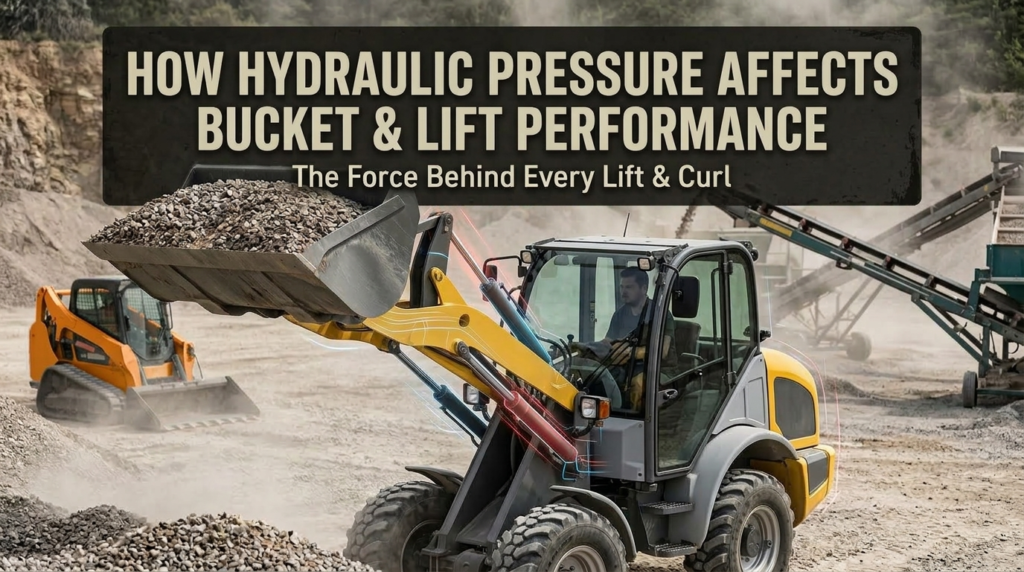
Pressure and flow perform different roles in a hydraulic system, and understanding the distinction is essential for evaluating any loader fairly. Pressure contributes to available force. It determines how hard the cylinders can push and how much resistance they can overcome when lifting a heavy load or curling through dense material. Flow, typically measured in gallons per minute (GPM) or liters per minute, is the volume of fluid the pump delivers over time. It affects how quickly hydraulic functions operate, meaning how fast the lift cylinders extend, how quickly the bucket curls and dumps, and how responsive the controls feel.
Because they govern different aspects of performance, both should be considered when evaluating bucket and lift performance. A loader with high pressure but limited flow may lift heavy loads with plenty of force, yet raise the arms slowly and stretch out every cycle. A loader with strong flow but inadequate pressure may move quickly with light material, then stall when the bucket meets a dense pile or a heavy load. Neither machine delivers its best productivity, because each is missing half of what a working hydraulic system needs.
Consider two loaders with identical pressure ratings. Both can generate similar force at the cylinders, but the machine with greater flow completes its lift and dump motions faster. Over hundreds of cycles in a shift, those saved seconds translate into more loads moved, shorter truck waiting times, and better use of fuel and labor. Hydraulic power, which combines pressure and flow, gives a more complete picture of what the system can deliver than either figure alone.
When you compare machines, look at system pressure, pump flow, published lift capacity, breakout force, and hydraulic cycle times together. Match those figures to the materials you handle and the pace your operation demands. A loader that balances adequate pressure with sufficient flow delivers both the strength to handle heavy, dense material and the speed to stay productive throughout the day.
Conclusion
Hydraulic pressure is the foundation of every lift and every bucket curl a loader performs. It creates the force that raises the arms and handles heavy loads, and it powers the breakout performance that lets the bucket dig into compacted soil, gravel, and other dense material. When pressure falls below its intended level because of leaks, worn components, clogged filters, or fluid problems, the result is slower movement, weaker lifting, and reduced bucket performance. Pressure also works in partnership with hydraulic flow, with pressure supplying force and flow supplying speed, so both deserve attention when you evaluate a machine.
Before selecting your next loader, compare system pressure, pump flow, lift capacity, and breakout force against the materials and workloads you handle most. Once the machine is in service, protect its hydraulic performance with regular inspections, timely filter and fluid changes, and prompt repairs. When pressure is matched to your work and maintained properly, your loader lifts confidently, digs efficiently, and delivers dependable productivity shift after shift. Contact our team to discuss which loader and hydraulic configuration best suit your application.
Frequently Asked Questions
1. What role does hydraulic pressure play in a loader?
Hydraulic pressure is the force that allows the loader’s cylinders and other hydraulic components to perform work. The pump moves fluid through the system, and when that fluid meets resistance, such as a heavy load in the bucket or dense material at the pile face, pressure builds. That pressure acts on the pistons inside the lift and tilt cylinders, converting fluid energy into mechanical force. The lift cylinders use this force to raise and lower the loader arms, while the tilt cylinders use it to curl the bucket back and dump it forward. Because both functions depend on the pressure the system can supply, pressure directly influences how much the loader can lift and how effectively the bucket can dig. Every loader’s system is designed around a maximum working pressure, and a relief valve keeps pressure within that limit to protect hoses, seals, and cylinders. Understanding this role helps you evaluate machines accurately and recognize when performance begins to decline.
2. Does higher hydraulic pressure always mean a loader can lift more?
Higher available pressure can increase cylinder force, since force equals pressure multiplied by piston area, but it does not automatically mean the loader can lift more. Lifting capability depends on several factors working together. Cylinder size determines how much force a given pressure produces, and lift arm geometry affects how that force reaches the bucket through the lift arc. The machine’s weight, counterweight, and rated operating capacity determine how much it can lift while remaining stable, and the manufacturer engineers these limits carefully. Pressure also only helps within the system’s designed range. Hoses, seals, pins, and structural parts are built for specific pressures, and exceeding them risks leaks, damage, and unsafe operation. For an accurate picture of lifting capability, review system pressure alongside cylinder sizing, rated operating capacity, and tipping load. Choosing a loader whose combined specifications match your typical loads is far more reliable than focusing on the pressure rating alone.
3. Why is breakout force important, and how does pressure affect it?
Breakout force is the maximum force the bucket can exert at its cutting edge to pry material loose and fill the bucket. It becomes especially important when digging into compacted soil, packed gravel, clay, blasted rock, or frozen ground, where the material strongly resists being separated from the pile. When the operator curls the bucket, pressure builds in the tilt cylinders as they push against that resistance. Adequate pressure allows the cylinders to generate enough force to curl through the material and fill the bucket in one smooth motion. Insufficient pressure causes the curl to stall, leaving the bucket partially filled and forcing the operator to reposition or make extra passes. Those extra movements waste fuel, increase tire wear, and reduce the number of full loads moved each hour. Breakout force also depends on bucket design, linkage geometry, and tilt cylinder size, so evaluate these together with system pressure when choosing a loader for dense material.
4. What are the signs of hydraulic pressure loss in a loader?
The most common signs of pressure loss are slower movement, weaker lifting, and reduced bucket performance. You may notice the lift arms rising more slowly under load, the machine struggling to raise heavy material to full height, or the bucket stalling in material it previously handled with ease. Lift arms drifting down while holding a load at height can indicate internal leakage past cylinder seals or valve components. Other warning signs include unusual whining or grinding from the pump, fluid temperatures running higher than normal, and visible fluid around hoses, fittings, or cylinders. Common causes include external and internal leaks, worn pumps, clogged filters, low or contaminated fluid, overheated fluid, and incorrect relief valve settings. Because pressure loss often develops gradually, operators may not notice it right away. Regular inspections, scheduled filter and fluid changes, and periodic pressure testing by a qualified technician help identify problems early and restore full performance before a small issue becomes an expensive repair.
5. Why should pressure and hydraulic flow be evaluated together?
Pressure and flow should be evaluated together because they control different aspects of hydraulic performance. Pressure contributes to the force the cylinders can generate, which determines how much the loader can lift and how effectively the bucket can break material out of a pile. Flow is the volume of fluid the pump delivers over time, and it determines how quickly the arms rise, how fast the bucket curls and dumps, and how responsive the controls feel. A loader with strong pressure but limited flow may handle heavy loads yet move slowly, lengthening every cycle. A loader with generous flow but insufficient pressure may move quickly with light material but stall under heavy loads or in dense piles. Evaluating both, along with lift capacity, breakout force, and hydraulic cycle times, gives you a complete view of how the machine will perform. The best choice balances adequate force with sufficient speed for the materials and pace of your operation.