
Currently Empty: $0.00

Understanding Road Roller Operating Weight and Compaction Force
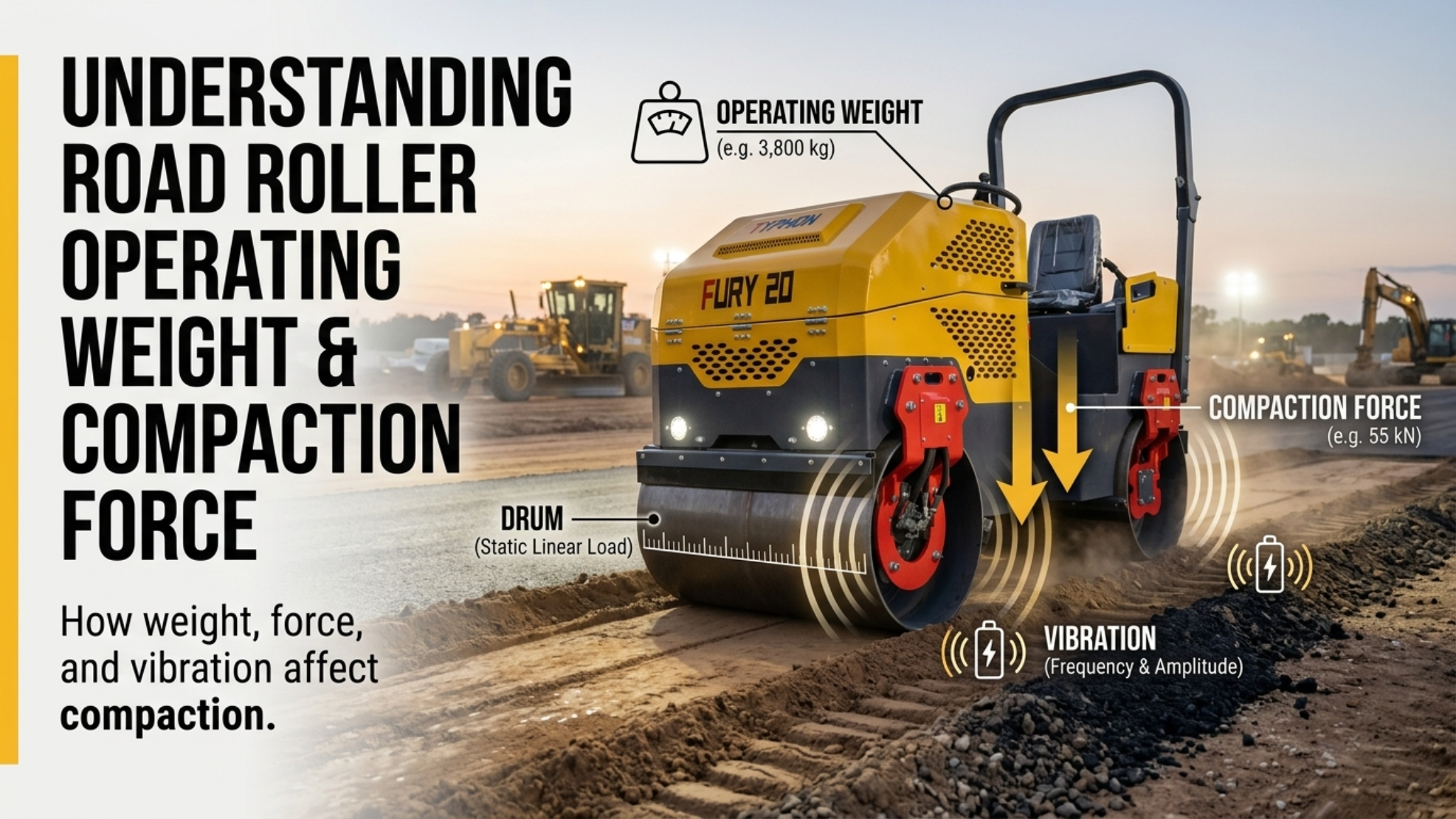
Compaction is one of the most critical stages in any earthwork or paving project, and the road roller sits at the heart of that work. Yet the numbers that define a roller, its operating weight and compaction force, are often misunderstood. These specifications determine how deeply a machine compacts, how well it densifies soil and asphalt, and how many passes a job will take to finish properly. Choosing the right roller for the task depends on understanding what these figures mean and how they work together. This post breaks down operating weight, compaction force, drum design, application matching, and vibration systems so you can make informed, confident decisions on every project.
The Role of Operating Weight in Road Roller Performance
Operating weight is the foundation of how a road roller performs, because it directly determines how much pressure the machine applies to the surface during compaction. When a roller passes over soil or asphalt, its mass presses down on the material, forcing particles closer together and driving out the air and voids that weaken a finished surface. The heavier the machine, the greater the downward pressure it delivers, and that pressure is what compacts material into a dense, stable layer capable of bearing loads for years to come.
That relationship between weight and pressure explains why heavier rollers generally achieve deeper compaction. A light machine may press the top layer of material into place while leaving the material below only loosely compacted, whereas a heavier roller drives force further down, densifying deeper into the lift. This makes weight a decisive factor when the depth of compaction matters as much as the surface finish.
Because of this, heavier rollers are especially well suited to demanding, large-scale work:
- Large-scale earthwork, where thick lifts of soil must be compacted thoroughly and reliably.
- Road construction, where deep, stable sub-bases and bases support the finished pavement above.
- Heavy foundation preparation, where dense, load-bearing ground is essential to long-term performance.
In each of these cases, the added mass of a heavier roller delivers the depth and consistency the project demands. Understanding operating weight as the source of compaction pressure gives operators and project managers a clear starting point for matching a machine to the scale and depth of the work ahead, ensuring the finished surface performs as intended long after the job is complete.
How Compaction Force Improves Soil and Asphalt Density
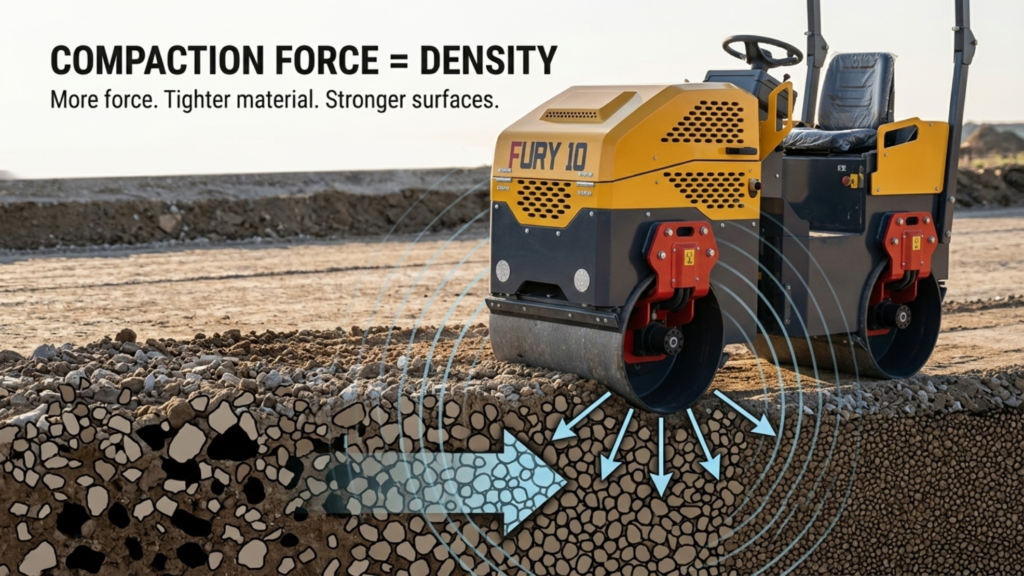
While operating weight provides the static pressure, compaction force describes the total effort the roller applies to densify material, and it is this force that ultimately determines the quality of the result. The goal of compaction is straightforward: remove the air gaps trapped between particles so the material becomes tighter, stronger, and more stable. Every void left behind is a weakness that can lead to settling, cracking, or failure over time, so the more effectively a roller drives out those gaps, the denser and more durable the finished surface becomes.
Modern rollers boost this effect through vibration, which adds a dynamic impact force on top of the machine’s static weight. As the drum vibrates, it delivers rapid, repeated blows to the material beneath it, momentarily loosening the particles so they can rearrange and settle into a tighter arrangement. This vibration impact allows a roller to achieve far greater density than static weight alone could produce, which is why vibratory rollers have become standard on so many soil and asphalt projects.
Understanding compaction force helps operators match the machine to the material and surface in front of them. Different materials respond differently to compaction, and reading those needs correctly is key to a strong result:
- Granular soils, such as sand and gravel, respond especially well to vibration that shakes particles into place.
- Cohesive soils, like clay, often need higher force to overcome their natural resistance.
- Asphalt, which requires carefully controlled force to reach density without displacing or damaging the mat.
By understanding how much compaction force a job requires, operators can select a roller capable of delivering the right density for the specific surface and material. That knowledge turns compaction from guesswork into a controlled, predictable process that produces stronger, longer-lasting results.
Balancing Roller Weight and Ground Pressure
Weight alone does not tell the whole story of how a roller performs, because how that weight reaches the ground matters just as much as how much of it there is. Ground pressure describes how the machine’s force is distributed across the surface it contacts, and it is shaped by the combination of the roller’s weight and its drum design. A heavy machine with a wide drum spreads its force over a larger area, while the same weight concentrated on a narrower drum applies more intense pressure to a smaller footprint. Both the mass and the drum work together to determine how effectively force transfers into the material.
Getting this balance right is what separates efficient compaction from wasted effort or damage. When weight and drum design are matched well to the job, force transfers into the material cleanly, densifying it in fewer passes and producing a uniform, high-quality surface. When the balance is off, problems follow quickly. Too much concentrated pressure can crack, displace, or damage a surface, while too little means the machine works harder and passes more often to reach the density the job requires.
Proper balance delivers benefits that reach across the whole operation:
- Efficient compaction, reaching target density without repeated, unnecessary passes.
- Surface protection, avoiding the cracking or displacement that poorly matched pressure can cause.
- Consistent results, producing an even, dependable finish across the entire work area.
Achieving this balance is a matter of choosing a machine whose weight and drum design suit the material and surface at hand. A well-matched roller applies exactly the pressure the job needs, transferring force effectively without harming the surface or demanding extra passes. For anyone focused on both quality and productivity, understanding the interplay between roller weight and ground pressure is essential to getting compaction right the first time.
Choosing the Right Roller Specifications for Different Applications
No single roller suits every project, which is why matching specifications to the application is one of the most important decisions on any job. Different projects call for very different levels of weight and compaction force, and selecting a machine that fits the work ensures both strong results and efficient use of resources. A roller that is too small for a demanding job will struggle to reach the required density, while one that is too large for light work risks damaging the surface and wasting fuel and effort. The right choice always begins with an honest assessment of what the project actually demands.
The range of roller sizes maps naturally onto the scale and intensity of different applications:
- Landscaping and small repairs, where lighter rollers provide gentle, controlled compaction on modest areas.
- Municipal and general paving, where mid-sized machines balance capability with maneuverability.
- Highways and heavy construction, where large, powerful rollers deliver the deep compaction and force that major projects require.
Seeing where a project falls along this spectrum helps clarify the weight and compaction force the job will need.
Choosing correctly pays off directly in productivity and final surface quality. A properly sized roller reaches target density efficiently, completing the work in fewer passes and finishing to the standard the project demands. It also protects the surface from the damage that an oversized machine can cause and avoids the incomplete compaction that comes from an undersized one. For contractors and project managers, taking the time to match roller specifications to the application is a practical investment that improves outcomes on every level. Understanding the demands of the work, from small-scale repairs to major infrastructure, ensures the machine on site is the right tool to deliver dependable, high-quality compaction.
How Weight and Vibration Systems Work Together
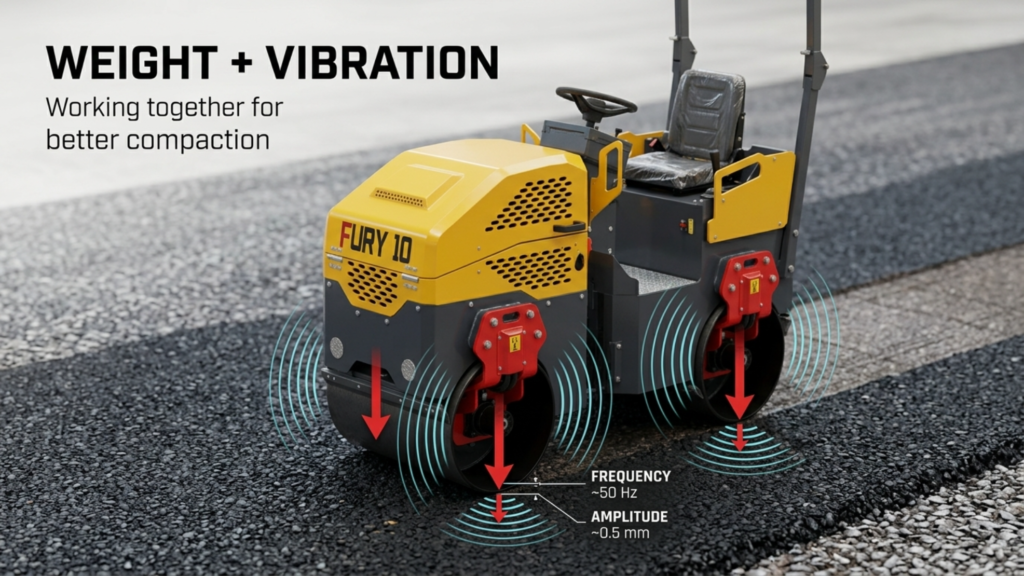
The real capability of a modern road roller comes from how its static weight and vibration technology work together as a single system. Static weight provides the steady, constant pressure that presses material into place, while vibration adds dynamic force that dramatically increases compaction efficiency. Combining the two allows a roller to achieve far greater density than either could produce alone, which is why nearly every serious compaction machine today pairs substantial mass with a capable vibration system. Understanding how these elements interact is key to getting the most from the equipment.
Two vibration settings shape how the system performs, and each plays a distinct role in the result:
- Vibration frequency, the number of times the drum vibrates per minute, which influences how smoothly and evenly the material densifies.
- Amplitude, the distance the drum moves during each vibration, which determines how deeply the compaction force reaches into the material.
Together with the roller’s mass, these two factors define how the machine drives density into the surface, and adjusting them lets operators tune the machine to the material in front of them.
The practical payoff of this interaction is compaction that is both more consistent and more efficient. When roller mass, vibration frequency, and amplitude are matched well to the job, the machine reaches target density in fewer passes, saving time, fuel, and wear while producing a uniform, high-quality surface. Higher amplitude drives force deeper for thick lifts and demanding soils, while lower amplitude and higher frequency suit finishing work and sensitive materials such as asphalt. By understanding how static weight and vibration systems complement one another, operators can achieve consistent, dependable results with less effort. That combination of mass and controlled vibration is what makes modern rollers so effective, turning demanding compaction work into a precise, productive process.
Conclusion
Road roller operating weight and compaction force are not abstract specifications — they are the practical forces that determine whether a finished surface holds up or falls short. Operating weight sets the foundation for compaction depth and pressure, while drum design controls how that pressure reaches the ground. Vibration systems multiply the effect, using frequency and amplitude to drive density into the material efficiently and with fewer passes. Matching these specifications to the demands of each project, whether a minor patch or a major highway, is what separates productive compaction from costly rework. By understanding how weight, ground pressure, and vibration work together, operators and project managers can select the right roller with confidence, protect surface quality, and deliver results that stand the test of time. The right machine, properly matched to the job, makes every pass count.
