Currently Empty: $0.00

How Hydraulic Heat Builds Up During Continuous Skid Steer Operation
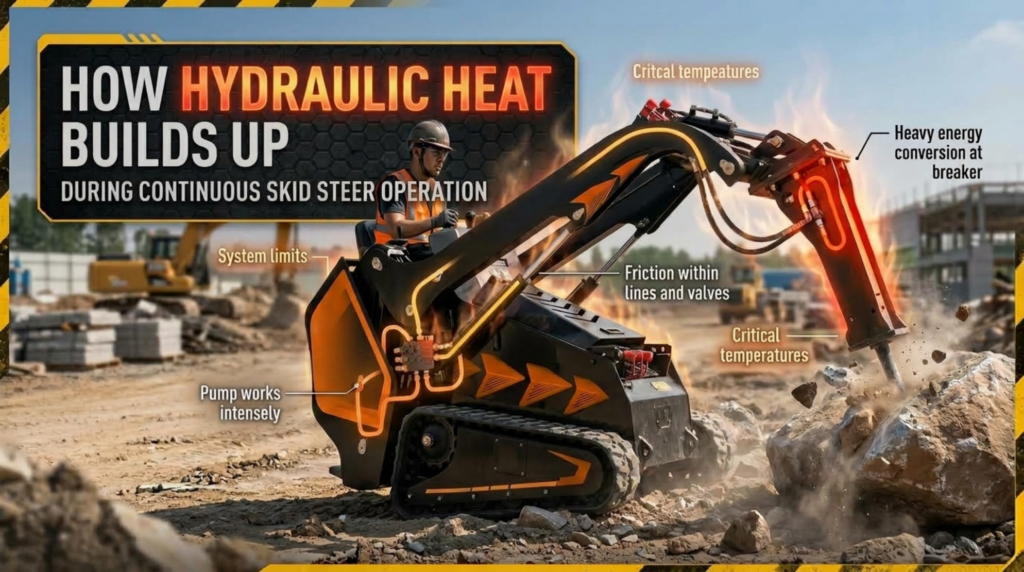
A skid steer earns its reputation on hard, uninterrupted work, but that same intensity puts real strain on its hydraulic system. Every cycle, every attachment passes, and every hour of steady effort generates heat that has to go somewhere. When that heat outpaces the machine’s ability to shed it, performance slips and wear accelerates. Understanding how hydraulic heat builds during continuous operation helps you keep your machine running strong through long shifts. Here is how heat accumulates, what makes it worse, and how proper cooling protects your productivity.
Continuous Hydraulic Use Generates More Heat
Heat is an unavoidable byproduct of hydraulic work. Every time oil moves under pressure through the pump, valves, cylinders, and hoses, friction and internal resistance turn some of that energy into thermal energy. During short or occasional tasks, the system has time to shed that heat between cycles. But continuous operation never gives it that chance, and the heat begins to build steadily as the machine keeps working.
Picture a skid steer running full tilt through a long shift. It scoops and dumps, repositions, and drives an attachment through demanding material, repeating the cycle hundreds of times an hour. Each of those movements draws on the hydraulic system, and the oil absorbs heat with every stroke. Running a demanding attachment such as a mulcher, cold planer, or trencher adds even more, since these tools keep the hydraulics loaded almost constantly without the brief pauses of a normal loader cycle.
This is why the length of a work cycle matters as much as its intensity. The longer the skid steer operates without a break, the more heat accumulates in the fluid and the less opportunity the system has to recover. Temperatures rise gradually, and the machine edges toward the upper end of its thermal range. A skid steer used for quick, intermittent jobs may never approach that limit, while one working continuously in tough conditions can reach it well before the shift ends. Recognizing this pattern is the first step toward managing heat and keeping the machine dependable through sustained, heavy work.
High Hydraulic Pressure Increases Heat Generation
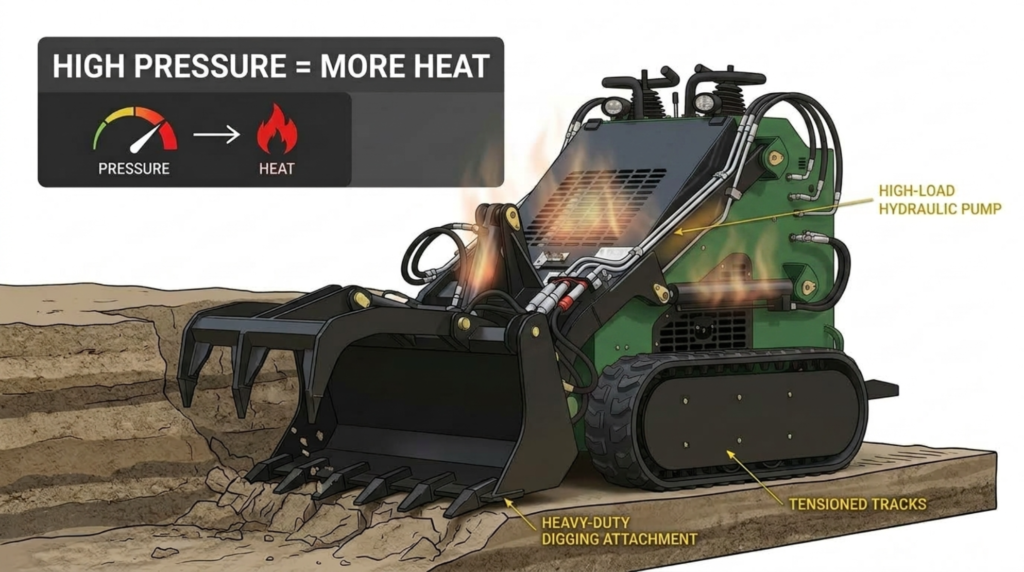
Pressure and heat are closely linked in any hydraulic system. Operating at high pressure requires more energy, and whenever the system works hard to generate and sustain that pressure, a portion of that energy converts into heat rather than useful motion. The harder the machine pushes, the more thermal energy it produces as a natural consequence of the effort involved.
A skid steer frequently working near its pressure limits feels this effect most. Digging into compacted ground, driving a high-flow attachment through dense material, or forcing the machine through resistance all demand strong, sustained pressure. In those moments, the hydraulic system operates at or near its ceiling, and more of the energy it consumes ends up as heat. When this kind of high-pressure work continues cycle after cycle, the heat contribution stacks up quickly.
It helps to understand where that heat comes from within the system. Relief valves, for example, protect components by capping maximum pressure, but when fluid is forced across them under high load, that energy is released largely as heat. Restrictions and heavy resistance throughout the circuit have a similar effect, converting hydraulic energy into warmth instead of movement. The result is a machine that runs hotter the closer it works to its pressure limits.
This does not mean high-pressure work should be avoided, since demanding tasks are exactly what a skid steer is built for. It means recognizing that heavy, continuous, high-pressure operation generates heat faster than lighter work. When you know your tasks push the machine near its limits regularly, you can plan for the cooling demand that comes with it and keep temperatures within a safe, productive range.
Restricted Cooling Reduces Heat Removal
Generating heat is only half the equation. A skid steer also has to remove that heat, and its cooling system carries that responsibility. The hydraulic oil cooler and radiator rely on a steady flow of air to carry heat away from the fluid and coolant. When that airflow is restricted, cooling performance drops, and heat that should be leaving the system stays trapped inside it instead.
Skid steers work in some of the dustiest, dirtiest environments around, which makes restricted cooling a common problem. Fine dust, dirt, and debris accumulate on screens, fins, and cores, forming an insulating layer that blocks airflow and slows heat transfer. On a busy jobsite, a cooler that started the day clean can become significantly clogged within hours, quietly reducing its ability to shed heat exactly when the machine needs it most.
Several conditions commonly restrict cooling on a working skid steer:
- Dust and debris: fine particles pack into cooler fins and radiator cores, insulating them and cutting heat transfer.
- Clogged screens: blocked intake screens starve the cooling system of the airflow it depends on.
- High ambient temperatures: hot weather leaves less of a gap between the air and the fluid, slowing how quickly heat can move away.
When these factors combine, the results add up fast. A skid steer working hard on a hot, dusty site faces heavy heat generation and reduced heat removal at the same time, a combination that drives temperatures up quickly. This is why keeping the cooling package clear matters so much. Even a properly sized cooling system cannot protect the machine if debris and blocked airflow prevent it from doing its job.
Hot Hydraulic Oil Can Reduce Performance
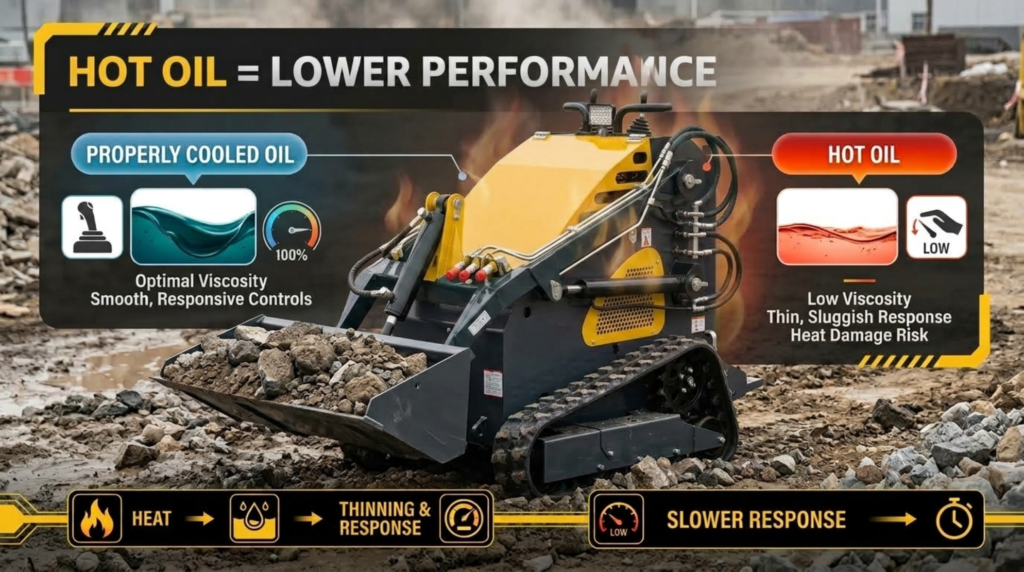
Hydraulic oil does far more than transmit force. Its physical properties depend heavily on temperature, and when the oil overheats, the whole system feels the effect. The most important of these properties is viscosity, which describes how thick or thin the oil is. As hydraulic oil heats up, it thins out, and that change alters how the system behaves under load.
Oil that becomes too thin struggles to maintain the protective film needed to seal components and reduce internal leakage. Efficiency declines, fluid slips past seals and clearances, and hydraulic response loses its sharpness. An operator may notice slower attachment response, sluggish loader movements, or a machine that simply does not feel as strong as it did when the oil was cool. Nothing has mechanically failed, but the fluid is no longer performing the way it should.
The consequences reach beyond the current shift. Excessive heat degrades the oil itself over time, shortening its service life and encouraging deposits and varnish that can harm sensitive components. Running hot also accelerates wear on pumps, valves, and cylinders, since thinner oil provides less protection between moving parts. What begins as a gradual drop in performance can develop into higher maintenance costs and shorter component life if the heat goes unmanaged.
Keeping oil temperature within a sensible range is what preserves consistent performance. When the fluid stays close to its ideal operating temperature, it holds its viscosity and continues to protect the components it flows through. The skid steer responds predictably, whether it started the day cool or has been working hard for hours. Controlling heat is not just about avoiding warnings on the display. It is about protecting the steady, reliable hydraulic performance your work depends on.
Proper Cooling Supports Long Working Cycles
The most effective defense against hydraulic heat is a cooling system kept in good condition and matched to the work. A well-maintained cooling package gives the skid steer the capacity it needs to control hydraulic temperature during continuous operation, allowing it to sustain heavy effort without the heat creeping into a range that threatens performance. Regular attention to that system pays off directly in reliability and uptime.
Keeping the cooler and radiator clean is the single most important habit. Because skid steers work in dusty, debris-heavy conditions, their cooling cores need frequent cleaning to maintain proper airflow. Checking and clearing screens, fins, and cores as part of daily maintenance prevents the gradual buildup that quietly chokes cooling performance. On especially dirty sites, more frequent cleaning through the day keeps temperatures under control when the machine is working hardest.
The hydraulic oil itself is equally important. Using the correct oil for the machine and the operating conditions helps the system manage heat and maintain consistent performance. A few practices support this directly:
- Use the specified oil: the correct viscosity grade helps the fluid resist thinning and hold its protective properties as temperatures rise.
- Keep oil clean and topped up: contaminated or low fluid reduces cooling efficiency and accelerates wear.
- Service on schedule: changing oil and filters at the recommended intervals preserves the fluid’s ability to shed heat and protect components.
When these habits come together, the skid steer holds stable temperatures through long, demanding cycles. A clean cooling system paired with the right, well-maintained oil keeps the machine performing consistently from the first hour to the last. This kind of routine care is what allows a skid steer to deliver dependable results shift after shift, even when the conditions turn hot and the work never lets up.
Conclusion
Hydraulic heat is a natural part of hard skid steer work, but it becomes a problem only when it outpaces the machine’s ability to shed it. Continuous operation and high-pressure tasks generate heat steadily, while dust, debris, and hot weather restrict the cooling that should remove it. Left unchecked, that heat thins the oil, slows response, and accelerates wear. The dependable answer is proper cooling: keep the coolers and radiator clean, use the correct hydraulic oil, and service the system on schedule. Manage heat well, and your skid steer will hold its performance through the longest, toughest shifts.
Frequently Asked Questions
1. Why does a skid steer generate so much hydraulic heat during continuous work?
Heat is a natural byproduct of hydraulic operation. As oil moves under pressure through the pump, valves, cylinders, and hoses, friction and internal resistance turn some of that energy into thermal energy. During short tasks, the system sheds this heat between cycles. Continuous operation never allows that recovery, so heat accumulates steadily. Repeated loader cycles and demanding attachments such as mulchers or trenchers keep the hydraulics loaded almost constantly, adding even more heat. The longer the machine runs without a break, the higher its temperature climbs.
2. How does hydraulic pressure affect heat generation?
Operating at high pressure requires more energy, and when the system works hard to generate and sustain that pressure, some of that energy converts into heat instead of useful motion. A skid steer working near its pressure limits, such as digging into compacted ground or driving a high-flow attachment through dense material, produces heat faster. Relief valves and circuit restrictions release much of that energy as heat when fluid is forced across them under heavy load. The closer and more often the machine works to its limits, the hotter it runs.
3. What causes cooling performance to drop on a skid steer?
Cooling relies on steady airflow through the hydraulic oil cooler and radiator, so anything that restricts that airflow reduces heat removal. Skid steers work in dusty, dirty environments, and fine dust and debris pack into cooler fins and radiator cores, forming an insulating layer that blocks airflow. Clogged intake screens starve the system of air, and high ambient temperatures leave a smaller gap between the air and the fluid, slowing heat transfer. On a hot, dusty site, these factors combine to drive temperatures up quickly.
4. What happens when hydraulic oil gets too hot?
When hydraulic oil overheats, its viscosity drops and it becomes too thin. Thin oil struggles to maintain the protective film that seals components and limits internal leakage, so efficiency declines. Operators often notice slower attachment response, sluggish loader movements, or a machine that feels weaker, even though nothing has mechanically failed. Prolonged high temperatures also degrade the oil itself, shortening its life and encouraging deposits that harm components. Running hot accelerates wear on pumps, valves, and cylinders, which can raise maintenance costs over time.
5. How can I keep hydraulic temperatures under control during long shifts?
Start with a well-maintained cooling system. Because skid steers work in debris-heavy conditions, clean the cooler, radiator, and intake screens regularly, and more often on especially dirty sites, to maintain proper airflow. Use the hydraulic oil specified for your machine and operating conditions, since the correct viscosity grade resists thinning and holds its protective properties as temperatures rise. Keep the oil clean and topped up, and change oil and filters at the recommended intervals. These habits help the machine hold stable temperatures through continuous, demanding work.