
Currently Empty: $0.00

Types of Mobile Cranes and Their Best Applications
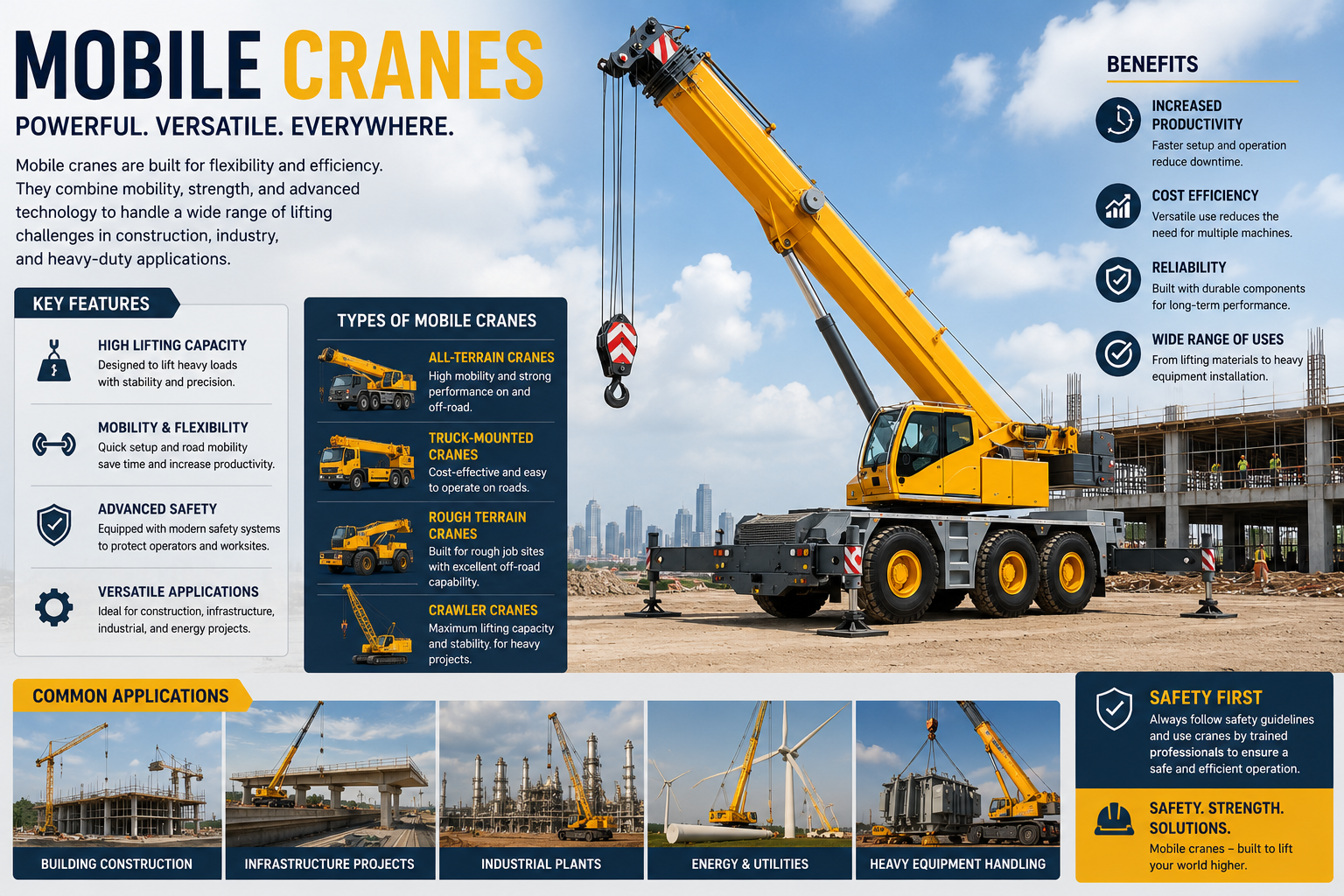
Pick the wrong crane for a lift, and you don’t just lose a day — you lose money on rental fees, idle crews, and a rescheduled project. Mobile cranes come in distinct types, each engineered for specific loads, ground conditions, and job sites. Matching the machine to the work is the single most important decision you’ll make before a lift ever begins.
This guide breaks down the six main types of mobile cranes, how each one works, where it performs best, and how to choose the right one for your project. You’ll also get practical safety considerations and clear takeaways you can apply on your next job.
Here’s what we’ll cover:
- The six main mobile crane types and their real-world strengths
- How to match a crane to your project, site, and load
- Key safety practices that protect your crew and your schedule
What Is a Mobile Crane?
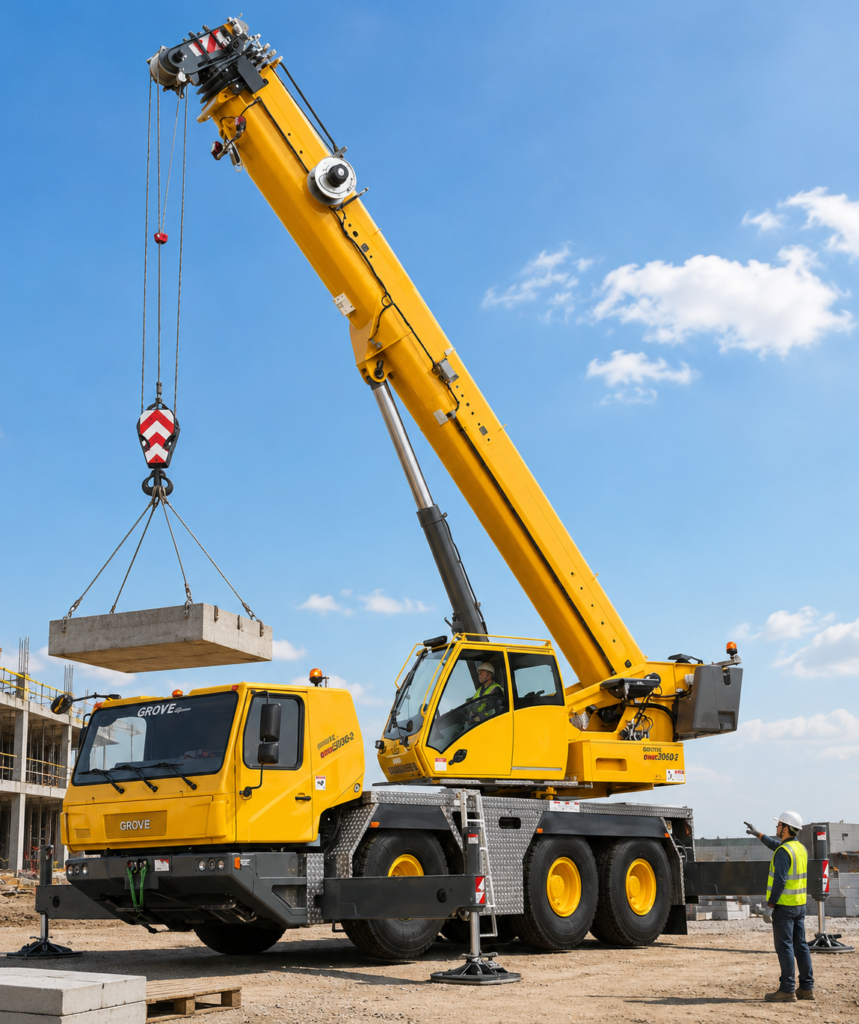
A mobile crane is a lifting machine mounted on wheels or tracks that can travel to and around a job site under its own power. Unlike a fixed tower crane, it sets up, lifts, and relocates as the work demands, which makes it the backbone of construction, infrastructure, energy, and port operations.
Every mobile crane balances three factors: lifting capacity, reach (boom length and radius), and mobility. A machine that excels at one often trades off another. A crawler crane lifts enormous loads but moves slowly, while a pick-and-carry crane travels freely but handles lighter weights. Understanding those trade-offs is where smart crane selection starts.
The key takeaway: each crane type is a deliberate balance of power, reach, and mobility — and the right choice depends on which of those your job needs most.
All-Terrain Cranes
All-terrain cranes combine the road speed of a truck-mounted crane with the off-road capability of a rough terrain machine. They ride on multiple axles — often four to nine — with all-wheel drive and all-wheel steering, so they travel highways at legal speeds and then work on soft or uneven ground once they arrive.
These cranes use a telescopic boom and outriggers for stability, delivering strong lifting capacity across a wide range of jobs. Capacities typically run from around 40 tons to well over 1,000 tons on the largest models.
Key strengths:
- Highway travel plus genuine off-road ability in one machine
- High lifting capacity with long telescopic reach
- Fast setup and teardown for jobs that move between sites
Best applications: All-terrain cranes shine on projects that demand both mobility and power — infrastructure work, bridge construction, wind turbine installation, and industrial jobs spread across multiple locations. A contractor moving between several urban job sites in a week gets maximum uptime because the crane drives itself there instead of riding a trailer.
Rough Terrain Cranes
Rough terrain cranes are built for one thing: working on unpaved, uneven, and confined ground where other cranes can’t operate. They ride on four large rubber tires with all-wheel drive, giving them the traction to move around a construction site — but they aren’t legal for highway travel and must be hauled between sites on a trailer.
A single cab controls both driving and lifting, and a telescopic boom handles the work. Their compact footprint lets them maneuver in tight, rugged spaces where room is scarce.
Key strengths:
- Excellent traction and stability on rough, unprepared ground
- Compact and maneuverable in tight job sites
- Strong lifting capacity for their size, commonly 30 to 150 tons
Best applications: These cranes are a staple on construction sites, oil and gas operations, and industrial plants where the terrain is challenging and the workspace is limited. On a muddy site preparing a foundation, a rough terrain crane keeps working when a road-going machine would bog down or lose stability.
Truck-Mounted Cranes
Truck-mounted cranes (also called boom trucks) place a crane on a standard commercial truck chassis. That design makes them highly mobile on paved roads and quick to deploy, since the same unit drives to the site and performs the lift without a separate transport vehicle.
They use a telescopic boom and outriggers, and while they don’t match the raw capacity or off-road ability of dedicated cranes, their speed and convenience make them ideal for lighter, frequent lifts across many locations.
Key strengths:
- Fast, self-contained travel on highways and paved roads
- Quick setup for short-duration jobs
- Cost-effective for lighter, high-frequency lifting work
Best applications: Truck-mounted cranes excel at utility work, sign and light-pole installation, HVAC placement, and municipal maintenance. A utility company servicing power lines across a city relies on them because the crane reaches each site fast and gets to work with minimal setup.
Crawler Cranes
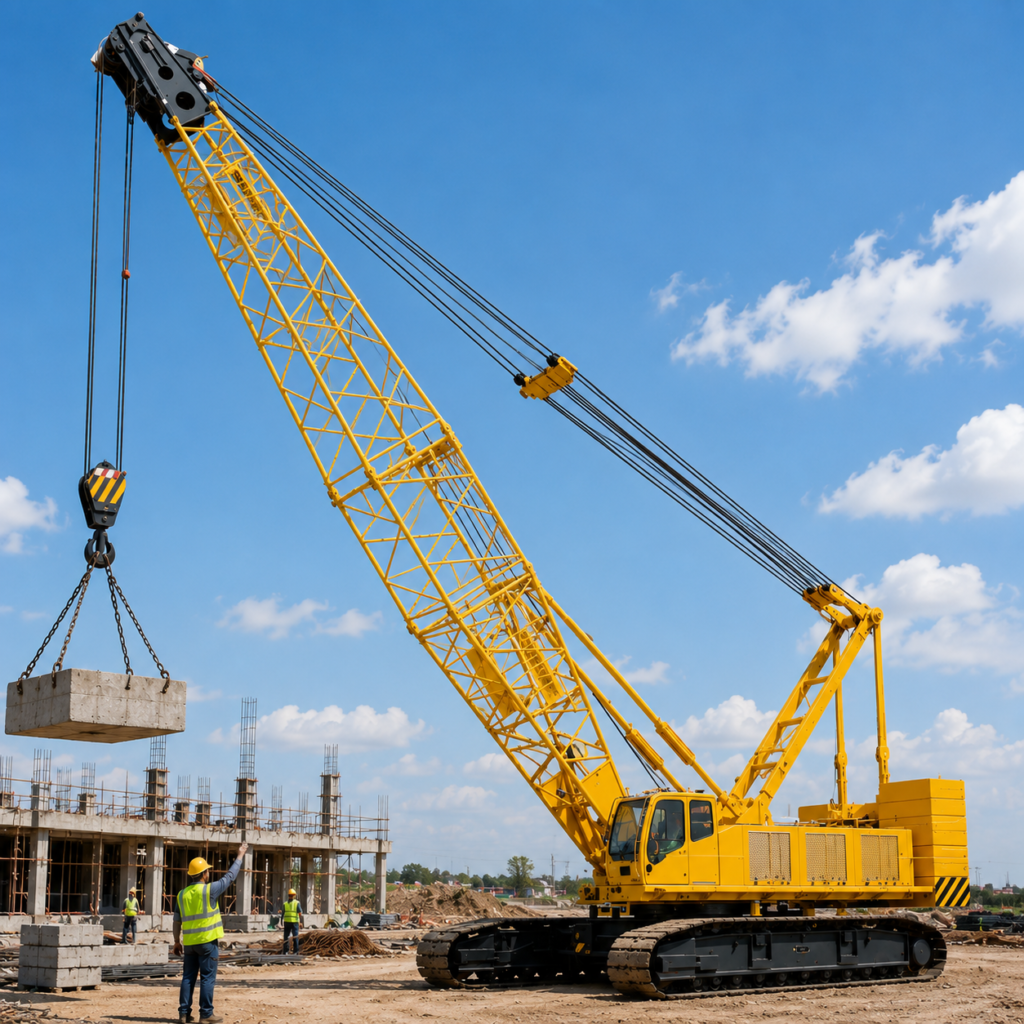
Crawler cranes ride on a pair of wide tracks instead of wheels, which gives them exceptional stability and the ability to lift massive loads. Because the tracks spread weight over a large area, these cranes often lift on-site without outriggers and can even travel short distances while carrying a load.
They use either a lattice boom (for maximum capacity and reach) or a telescopic boom. The trade-off is mobility: crawler cranes can’t travel on roads and must be disassembled and hauled to the site, then reassembled — a significant time and cost commitment.
Key strengths:
- Extremely high lifting capacity, from 40 tons to several thousand tons
- Outstanding stability on soft ground thanks to track weight distribution
- Ability to travel with a suspended load and work without outriggers
Best applications: Crawler cranes are the machines of choice for large-scale, long-duration projects: power plants, refineries, bridge and highway construction, wind farms, and major infrastructure. On a project that runs for months in one location, the setup cost pays off because the crane handles the heaviest lifts nothing else can.
Pick-and-Carry Cranes
Pick-and-carry cranes are designed to lift a load and then drive it to another location on the same site — no outriggers, no repositioning setup. They’re compact, highly mobile, and built for speed and efficiency in moving loads over short distances.
Because they carry loads while moving, they trade lifting capacity and reach for mobility. Most operate in the lighter capacity range, and they’re common where quick, repetitive material movement matters more than heavy vertical lifts.
Key strengths:
- Lifts and transports loads in one continuous operation
- Highly maneuverable in confined and busy work areas
- Fast, efficient for repetitive material handling
Best applications: Pick-and-carry cranes are widely used in yards, warehouses, workshops, and factories, as well as on infrastructure and maintenance jobs. In a fabrication yard moving steel components between stations all day, a pick-and-carry crane keeps material flowing without the stop-start of a crane that must set up for each lift.
Telescopic Boom Cranes
The telescopic boom is a design feature found across several crane types — all-terrain, rough terrain, and truck-mounted machines all use one — but it’s worth understanding on its own because it defines how a huge share of mobile cranes work.
A telescopic boom is made of nested sections that extend and retract hydraulically, like a collapsible antenna. This lets the operator adjust boom length quickly and precisely for the lift at hand, then retract it for travel and storage. The result is fast setup, versatile reach, and a compact profile.
Key strengths:
- Rapid extension and retraction for quick, adaptable setup
- Compact when retracted, easing transport and travel
- Versatile across a wide range of lift heights and radii
Best applications: Telescopic boom cranes suit jobs that value speed and flexibility — construction, equipment installation, emergency and rescue work, and any site where lifts vary and setup time matters. For a crew handling several different lifts in a single shift, the telescopic boom adjusts on the fly instead of demanding reconfiguration between tasks.
Lattice versus telescopic: where telescopic booms prioritize speed and versatility, lattice booms (common on crawler cranes) offer greater capacity and reach at height, but take far longer to assemble. Choose telescopic for flexibility, lattice for maximum heavy-lift performance.
How to Choose the Right Mobile Crane
The right crane comes down to matching the machine to the specifics of your project. Work through these questions before you rent or buy.
- Define the load. Know the maximum weight you’ll lift, and confirm the crane’s rated capacity at the actual working radius — not just its headline maximum. Capacity drops sharply as the boom extends and the load moves away from the machine.
- Measure the reach. Determine the height and horizontal distance every lift requires. The crane must handle your heaviest lift at its farthest and highest point.
- Assess the ground and access. Firm, paved sites favor truck-mounted and all-terrain cranes; soft or uneven terrain calls for rough terrain or crawler machines. Confirm the crane can physically reach and fit the work area.
- Factor in travel and duration. For jobs that move between sites, mobility matters — an all-terrain or truck-mounted crane drives itself there. For a single long-duration project, a crawler crane’s setup cost is easily justified.
- Weigh setup time and cost. Telescopic booms set up in minutes; lattice-boom crawler cranes require assembly. Match the setup effort to your schedule and budget.
- Confirm total cost. Look beyond the rental or purchase price to transport, assembly, operator requirements, and support.
The key takeaway: start with the load and the site, then let those facts point you to the crane type — never the other way around.
Key Safety Considerations
A mobile crane is a powerful machine, and safe operation protects your crew, your equipment, and your schedule. Build these practices into every lift.
- Plan every lift. Develop a lift plan that accounts for load weight, radius, boom configuration, and ground conditions before the crane arrives.
- Confirm the load chart. Never exceed the crane’s rated capacity for the specific radius and boom length. The load chart is the machine’s law — know it and follow it.
- Assess the ground. Verify the surface can support the crane and its load. Use outrigger pads or mats to spread weight and prevent sinking or tipping.
- Set outriggers correctly. Fully deploy and level outriggers where the crane requires them. Improper setup is a leading cause of tip-overs.
- Watch for overhead hazards. Maintain safe clearance from power lines and structures. Contact with electrical lines is among the most serious crane accidents.
- Use qualified operators and signal persons. Only trained, certified operators should run the crane, and clear communication with a designated signal person is essential.
- Inspect daily. Check the crane, rigging, and safety systems before each shift, and monitor weather — high winds can make a lift unsafe.
The key takeaway: most crane incidents trace back to overloading, poor ground assessment, or improper setup. Disciplined planning prevents nearly all of them.
OSHA Trenching Standards & E-Tools: Access official compliance rules, safety posters, and field inspection tools directly via the Occupational Safety and Health Administration (OSHA) Trenching and Excavation Resource Page.
National Soil Survey Geographic Databases: Review architectural maps, soil properties, and load-bearing data using the USDA Web Soil Survey Portal, the primary technical framework used by surveyors and engineers across the United States.
Match the Crane to the Job
Choosing the right mobile crane is about matching capacity, reach, and mobility to the real demands of your project. All-terrain cranes deliver road speed and power; rough terrain cranes conquer difficult ground; truck-mounted cranes offer fast, frequent lifts; crawler cranes handle the heaviest long-term work; pick-and-carry cranes move loads efficiently on-site; and telescopic boom machines provide speed and flexibility across the board.
Start with an honest assessment of your load, your reach, and your site conditions, then let those facts guide you to the crane type built for the work. Back that choice with a solid lift plan, a qualified operator, and disciplined safety practices, and you’ll complete the job on time, on budget, and without incident.
Your next step: write down your heaviest lift, its working radius and height, and your site’s ground conditions. Bring that short spec sheet to your crane supplier, and you’ll turn a guessing game into a confident, well-matched decision — every time.
