Currently Empty: $0.00
How Skid Steer Weight Affects Performance
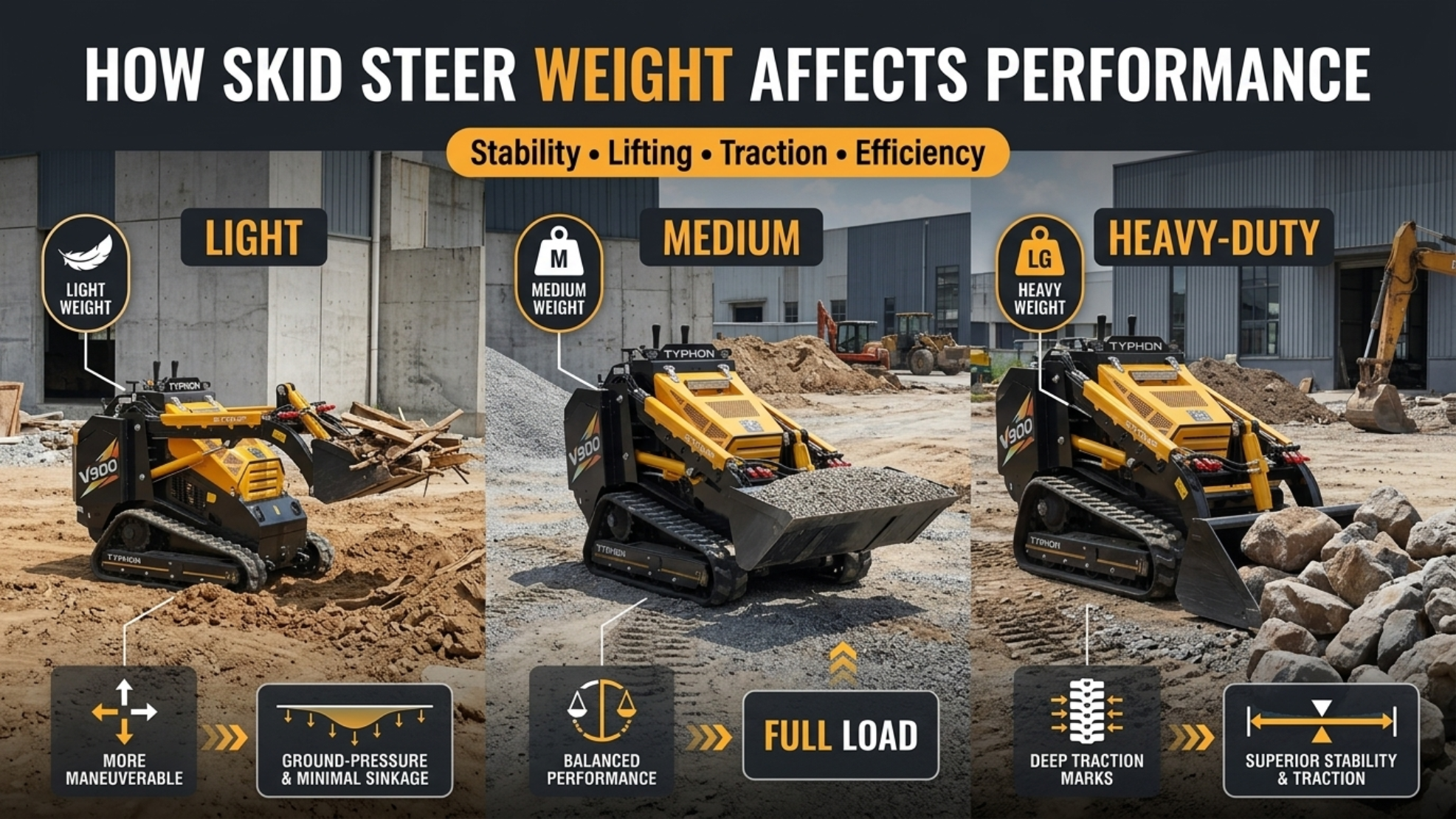
Weight is one of the most important yet overlooked factors in how a skid steer performs. It shapes nearly everything the machine does, from how steadily it holds a load to how it moves across soft ground and how much fuel it burns through a shift. Buyers often focus on horsepower or bucket size, but the operating weight quietly governs stability, lifting strength, traction, and efficiency in ways that determine whether a machine truly fits the work. Understanding how weight influences performance helps you choose equipment that matches your job sites rather than fighting against them. This guide explains how skid steer weight affects stability, lifting capacity, traction, fuel efficiency, and application fit.
Weight and Stability: Finding the Right Balance
A skid steer’s weight plays a major role in keeping the machine stable, and that stability underpins nearly every task the operator performs. When a skid steer lifts a load, digs into resistant ground, or works across uneven terrain, forces act on the machine that would unsettle a lighter, less balanced design. Adequate weight gives the machine a planted, secure feel, letting it hold its footing through the demands of real work. Think of weight as the ballast that keeps the machine steady when the job tries to push it off balance.
That stability matters most in the moments where control is hardest to maintain. Several situations rely heavily on a well-balanced machine:
- Lifting, where a raised load shifts the center of gravity and tests the machine’s footing.
- Digging, where breakout forces push against the machine as it works into the ground.
- Uneven terrain, where slopes and rough surfaces threaten to tip a poorly balanced machine.
In each case, the right weight helps counter those forces and keeps the machine planted where a lighter design might feel twitchy or unsafe.
The payoff reaches beyond preventing tip-overs, though that safety benefit alone is significant. A stable machine gives the operator confidence, and confidence translates directly into better control and smoother, more productive work. When an operator trusts that the skid steer will stay steady through a lift or a dig, they can focus on the task rather than worrying about the machine’s footing. The goal is finding the right balance: enough weight to hold the machine secure through demanding work, distributed in a way that keeps it steady and predictable. That balance is what turns a capable skid steer into one an operator can rely on shift after shift.
How Operating Weight Impacts Lifting Capacity
Operating weight and lifting capacity are closely linked, and understanding that relationship helps explain why heavier machines often handle larger loads. When a skid steer raises a load at the front, that weight tries to pull the machine forward and down. The mass of the machine itself acts as a counterbalance, resisting that pull and keeping the skid steer stable as it lifts. Heavier skid steers generally provide better counterbalance and stronger lifting performance, letting them handle larger loads with the stability that safe lifting demands.
This is why buyers moving heavy material so often gravitate toward machines with greater operating weight. A well-balanced heavier machine can raise a full bucket or a bulky load without feeling as though it might tip forward, giving the operator both capability and confidence. The added mass turns demanding lifts into steady, controlled work rather than a nervous balancing act.
Weight is not a case of “more is always better,” though, and recognizing its limits is just as important. Excessive weight carries real trade-offs that can work against you:
- Reduced mobility, since a very heavy machine can feel less nimble and harder to maneuver in tight spaces.
- Increased ground pressure, which raises the risk of sinking, rutting, or damaging softer surfaces.
These drawbacks mean the heaviest machine is not automatically the best choice for every operation.
The smart approach is to match operating weight to your lifting needs rather than chasing maximum mass. If your work regularly involves heavy loads, the counterbalance and lifting strength of a heavier machine are well worth their trade-offs. If your loads are lighter and your sites demand agility or gentle handling of the ground, a more moderate weight may serve you far better. Weighing your typical loads against these factors ensures you gain the lifting capacity you need without taking on the mobility and ground-pressure penalties that excess weight brings.
The Effect of Weight on Traction and Ground Performance
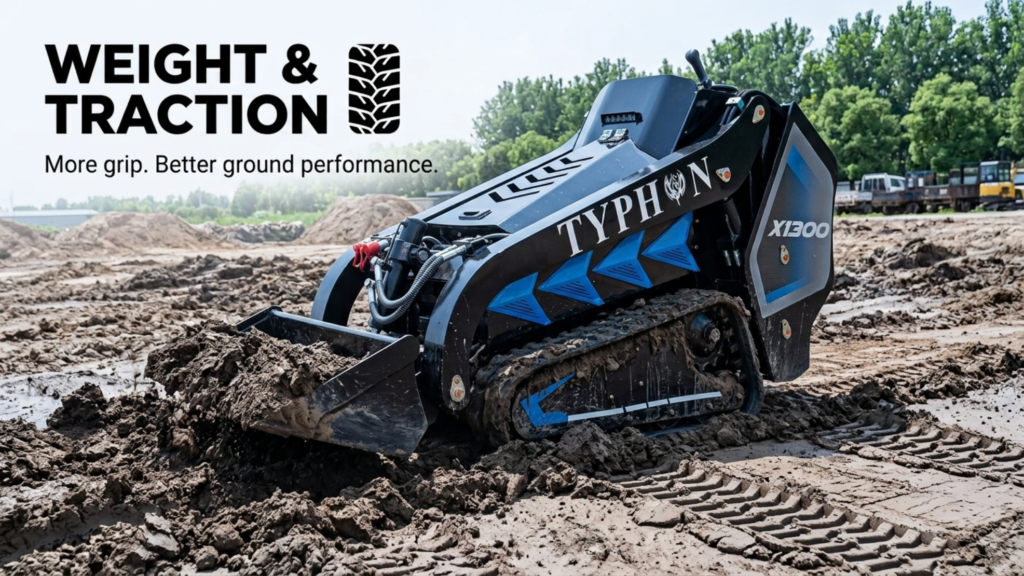
A skid steer’s weight has a direct effect on how well it grips the ground and puts its power to work. Traction depends on the connection between the machine and the surface beneath it, and weight influences that connection significantly. A heavier machine presses its tires or tracks more firmly into the ground, which helps it transfer engine power into forward movement and digging force rather than losing it to slipping. In demanding conditions, that added grip can be the difference between a machine that keeps working and one that spins helplessly in place.
Ground conditions shape how this plays out, and matching weight to the surface is key to strong performance:
- Muddy conditions, where a heavier machine can dig its tracks or tires in for grip while a lighter one may struggle to gain purchase.
- Rough or loose terrain, where added weight helps the machine stay planted and maintain steady traction.
- Delicate or soft surfaces, where a lighter machine reduces the risk of sinking, rutting, or tearing up the ground.
Each condition rewards a different balance, so the ideal weight depends heavily on where the machine works.
The trade-off between traction and surface protection is what makes weight such a practical consideration for ground performance. Heavier skid steers earn their keep in tough, unforgiving conditions where grip is hard to come by, delivering the traction needed to keep working through mud and rough ground. Lighter models, by contrast, shine on surfaces that cannot bear concentrated weight, treading gently where a heavier machine would leave damage behind. Neither approach is universally better; each simply suits different ground. Reading your typical working surfaces accurately lets you choose a machine whose weight delivers the traction you need without harming the ground you work on, protecting both productivity and the sites you operate across.
Fuel Efficiency and Mobility Considerations
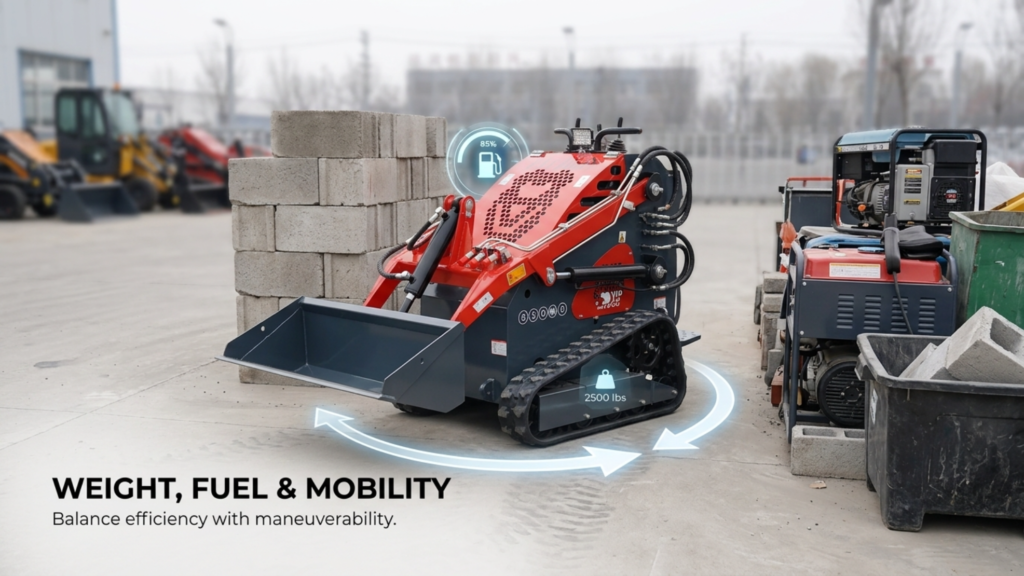
Weight affects not only what a skid steer can do but also how much energy it takes to do it. Moving and operating a heavier machine demands more power, and that power comes at the cost of fuel. A skid steer carrying substantial mass works harder to travel across a site, accelerate, and maneuver, which naturally raises fuel consumption over the course of a shift. Over months and years of operation, those differences add up, making weight an important factor in the true cost of running the machine.
Mobility follows a similar pattern, since weight shapes how nimble a machine feels in daily use. A lighter skid steer generally moves and turns more easily, making it well suited to work that involves frequent repositioning, tight spaces, or quick cycles. A heavier machine, while steadier under load, can feel less agile and may require more effort to move around a busy or confined site. For operations where maneuverability drives productivity, that difference matters just as much as raw capability.
Choosing the right weight class is how you balance these competing demands. Rather than defaulting to the heaviest or lightest option, the goal is to match weight to the work so the machine performs efficiently without wasting energy or agility. A machine that is heavier than your tasks requires burns fuel and sacrifices nimbleness for capability you rarely use, while one that is too light may struggle with the loads and conditions you face. The right weight class optimizes fuel consumption, keeps the machine maneuverable enough for your sites, and supports overall jobsite efficiency. Weighing your fuel costs, your need for agility, and the demands of your work together points you toward a skid steer that moves, operates, and performs in a way that makes practical and financial sense for your operation.
Choosing the Right Skid Steer Weight for Your Application
Selecting the right skid steer weight comes down to understanding the work you do and the environment you do it in. Different jobs call for different weight ranges, and the ideal machine for one operation may be entirely wrong for another. Rather than assuming a heavier or lighter machine is inherently better, the smart approach is to weigh the demands of your typical tasks and choose the weight class that fits them. A machine matched thoughtfully to your work performs safely and efficiently, while one chosen without regard for the application tends to disappoint in exactly the conditions you face most.
The range of weight classes maps naturally onto different kinds of work:
- Lightweight machines suit landscaping and finish work, where agility and gentle handling of the ground matter most.
- Mid-weight machines balance capability and mobility for general contracting and mixed tasks.
- Heavy-duty machines serve demanding construction and material-handling work, where lifting strength and traction take priority.
Seeing where your work falls along this range helps clarify which weight class will serve you best.
A few practical questions bring the decision into focus. Consider how heavy your typical loads are, what surfaces you work on, how confined your sites tend to be, and how much your fuel and mobility needs weigh into daily productivity. If your work involves heavy loads on rough or muddy ground, a heavier machine delivers the stability, lifting capacity, and traction those conditions demand. If your projects call for agility, gentle ground handling, and efficient movement, a lighter machine will serve you far better. Understanding your work environment is what ties every factor together, letting you select a skid steer whose weight delivers the best possible performance for the jobs that matter most to your business.
Conclusion
Skid steer weight is far more than a number on a spec sheet. It shapes how steadily the machine performs under load, how effectively it grips the ground, how much fuel it burns through a working day, and how well it fits into the spaces your jobs demand. Heavier machines bring lifting strength, stability, and traction on tough terrain, while lighter ones offer agility, fuel savings, and gentler handling of sensitive surfaces. Neither extreme is right for every job, and the most productive choice always comes from matching weight to the work you actually do. When you take the time to assess your typical loads, your ground conditions, your site constraints, and your efficiency needs, you gain a clear picture of the weight class that will serve you best. Choose wisely, and your skid steer becomes a reliable, efficient partner on every job site.