Currently Empty: $0.00
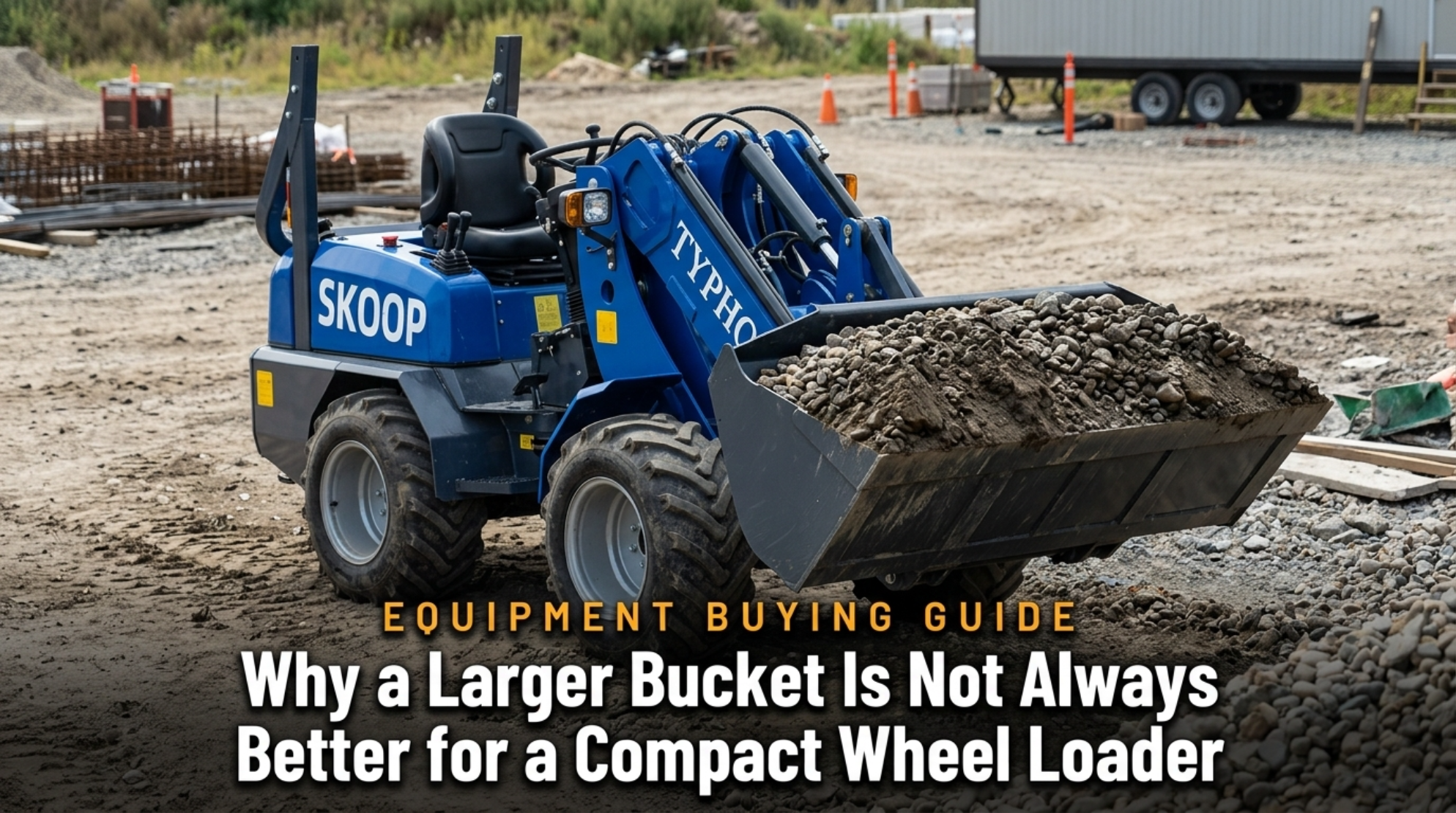
Why a Larger Bucket Is Not Always Better for a Compact Wheel Loader
It’s easy to assume that a bigger bucket means more work done in less time. On paper, more volume per scoop sounds like a straightforward win. But when it comes to compact wheel loaders, that logic often breaks down. These machines are built around a careful balance of weight, power, and stability, and fitting them with an oversized bucket can disrupt that balance in ways that hurt your productivity rather than help it.
Choosing the right bucket is one of the most important decisions you can make for your loader. The correct size protects your machine, keeps your operators safe, and helps you get more real work done across a full shift. Below, we break down five key reasons why bigger is not always better, and how to make a smarter choice for your equipment and your jobsite.
Bucket Size Must Match the Loader’s Capacity
Every compact wheel loader is engineered with a rated operating capacity. This figure represents the maximum load the machine can safely lift and carry while staying balanced and controllable. When you fit a bucket that is too large, you make it far too easy to exceed that limit, even without meaning to. A bucket that looks reasonable when empty can quickly overwhelm the machine once it’s filled with dense material.
Matching the bucket to the loader’s capacity is about more than just avoiding overloads. It’s about preserving the machine’s designed performance. Hydraulics, axles, and lift arms are all built to handle a specific range of loads. Push past that range regularly, and you place extra strain on these components, which can lead to premature wear and costly downtime.
When selecting a bucket, keep a few core specifications in mind:
- Rated operating capacity: The safe working load your loader is designed to handle.
- Operating weight: Heavier machines can generally support larger buckets, but only within limits.
- Breakout force: The digging power available to fill the bucket without stalling.
A bucket sized to fit these numbers lets the loader work the way its designers intended. It fills smoothly, lifts confidently, and carries loads without protest. That consistency translates directly into reliable output, fewer breakdowns, and a machine that holds its value over time. The goal is not to carry the most material possible in one scoop, but to carry the right amount every single cycle.
Larger Buckets Can Reduce Stability
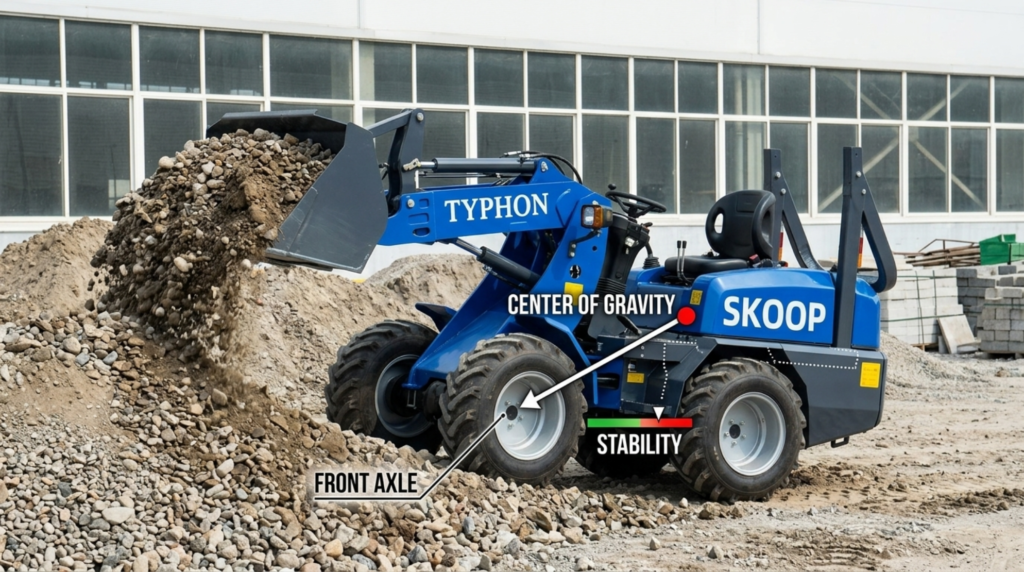
Stability is the foundation of safe and efficient loader operation, and bucket size plays a direct role in it. An oversized bucket carries more material, and it holds that material farther out in front of the machine. This shifts the loader’s center of gravity forward and upward, which changes how the machine behaves during lifting, carrying, and dumping.
The physics here are simple but important. The farther a load sits from the loader’s front axle, the more leverage it exerts against the machine’s balance. A heavy load held high and forward can lighten the rear of the loader, reducing traction and making the machine feel tippy. On level, prepared ground this may not be obvious. But real jobsites are rarely perfect.
Uneven terrain magnifies every stability problem. Consider the conditions your loader faces on a typical day:
- Sloped or graded surfaces where weight naturally shifts downhill
- Soft or muddy ground that gives way under one side of the machine
- Debris, ruts, and potholes that cause sudden jolts during travel
In each of these situations, an oversized bucket makes the machine harder to control and slower to recover if it starts to tip. Operators may compensate by moving more cautiously, which slows the whole operation down. In worse cases, a loss of stability can lead to spilled loads, damaged equipment, or serious safety incidents.
A properly sized bucket keeps the load closer to the machine’s ideal balance point. This gives operators the confidence to work at a steady pace, even when ground conditions are less than ideal. Stability is not a feature you notice until it’s gone, and by then the cost can be high.
Material Density Matters
One of the most common mistakes in bucket selection is thinking only about volume. A bucket’s capacity is often listed in cubic feet or cubic yards, which tells you how much space it holds. What that number doesn’t tell you is how much the material inside will actually weigh. That’s where material density comes in, and it makes an enormous difference.
Two buckets of the same size can carry wildly different loads depending on what fills them. A scoop of light, dry mulch weighs a fraction of the same scoop filled with wet gravel or saturated soil. The volume is identical, but the weight is not. If you size a bucket for lightweight materials and then use it for heavy ones, you can overload your compact wheel loader without ever filling the bucket to the brim.
Here’s how density affects your choices across common materials:
- Light materials such as wood chips, snow, or dry compost let you safely use a larger bucket, since volume fills up before weight becomes a concern.
- Medium materials such as topsoil or loose aggregate require a more balanced approach between volume and weight.
- Heavy materials such as wet sand, gravel, or clay demand a smaller bucket, because weight limits are reached long before the bucket is full.
The smart approach is to think about the heaviest material your loader will regularly handle and size the bucket accordingly. This prevents accidental overloads and keeps the machine operating within its safe range. If you work with a wide variety of materials, you may even benefit from having more than one bucket, each matched to a different density range. Matching bucket size to material weight, not just volume, is one of the simplest ways to protect your equipment and improve daily performance.
Bigger Does Not Always Mean More Productivity
The appeal of a larger bucket usually comes down to a single idea: more material per cycle should mean faster work. In theory, fewer trips back and forth should add up to shorter completion times. In practice, however, productivity depends on far more than how much a bucket can hold. A bucket that’s too big can actually slow the entire operation down.
Start with cycle time. A heavier, fully loaded oversized bucket takes longer to lift, carry, and dump because the machine is working closer to its limits. Hydraulic functions slow under heavier loads, and the operator has to move more carefully to keep everything controlled. Those extra seconds on every cycle add up quickly across a full day of repetitive loading.
Maneuverability suffers too. Compact wheel loaders earn their keep in tight spaces, and a large bucket makes the machine longer and more awkward to position. Operators spend more time lining up each scoop and dump, which chips away at the time savings a bigger bucket was supposed to deliver.
Consider the hidden costs of going too big:
- Slower lift and dump cycles under heavier loads
- Reduced traction that leads to wheel spin and wasted effort
- More frequent stops to reposition or recover control
- Increased fuel consumption as the engine works harder
A right-sized bucket often moves more material over the course of a shift precisely because it keeps the machine nimble and efficient. Each cycle is quick, smooth, and predictable, and the operator can maintain a steady rhythm without fighting the load. Real productivity comes from consistent, controlled work, not from the size of any single scoop. Measuring output over hours rather than seconds usually reveals that the balanced bucket wins.
The Right Bucket Depends on the Job
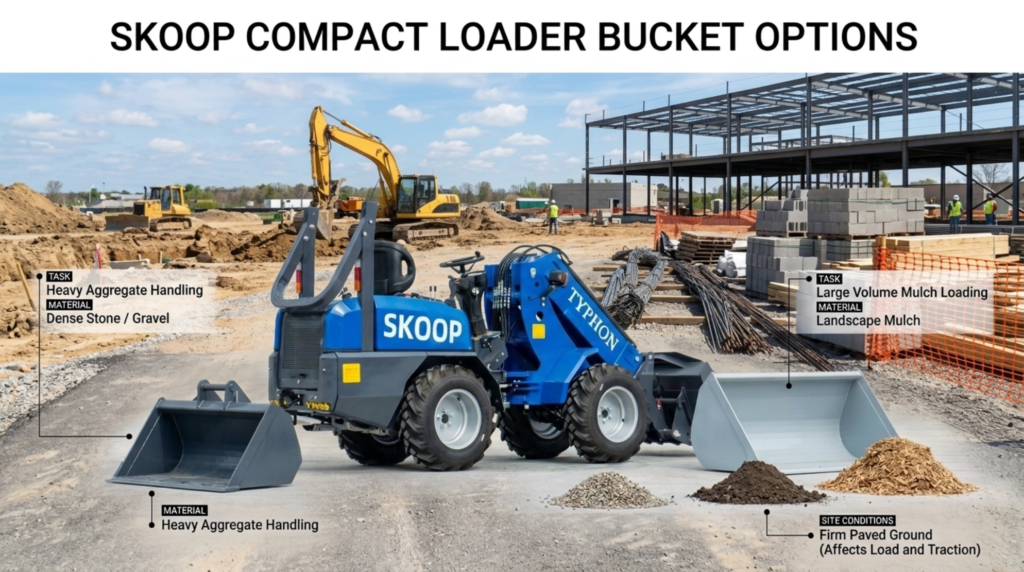
There is no single bucket that’s perfect for every situation, which is exactly why bigger is not automatically better. The best choice depends on a combination of factors that come together differently on every jobsite. Understanding those factors helps you match the tool to the task rather than defaulting to the largest option available.
Three main considerations should guide your decision. First, look at your loader’s specifications, including its rated capacity, operating weight, and breakout force. These set the outer limits of what the machine can safely handle. Second, think about the materials you’ll be moving and how dense they are. Third, factor in your working conditions, from ground stability to how much space you have to maneuver.
Different jobs call for different setups. A landscaper moving mulch and topsoil across an open yard has very different needs than a contractor loading wet gravel in a cramped work area. Consider how the variables shift:
- Task type: Digging, grading, loading, and stockpiling each favor different bucket shapes and sizes.
- Material handled: Light and bulky materials suit larger buckets, while dense materials call for smaller ones.
- Site conditions: Confined or uneven sites reward a compact, controllable setup.
For operations that handle a wide range of work, investing in more than one bucket can be worthwhile. Swapping to the right bucket for each task keeps the loader operating efficiently and safely across the board. It’s a small investment that pays off in smoother work and longer equipment life.
Ultimately, the goal is to choose a bucket that lets your compact wheel loader do what it does best. When the bucket, the machine, the material, and the job are all in balance, you get reliable performance and better results. That balance, not raw size, is the true measure of the right bucket.
Frequently Asked Questions
1. How do I know if my bucket is too large for my compact wheel loader?
Check your loader’s rated operating capacity against the loaded weight of your bucket. If the bucket, when filled with your typical material, pushes the machine toward or past that rating, it’s too large. Warning signs during operation include a light or unstable rear end, sluggish lifting, wheel spin, and the machine feeling tippy on uneven ground. When in doubt, size down.
2. Does bucket size affect fuel consumption?
Yes. An oversized bucket forces the engine and hydraulics to work harder on every cycle, which burns more fuel. Heavier loads also cause more wheel spin and slower travel, wasting energy without adding output. A properly sized bucket keeps the machine operating in its efficient range, helping you get more work done per gallon and reducing operating costs over time.
3. Should I choose a bucket based on volume or weight?
Both matter, but weight should be your limiting factor. Volume tells you how much space the bucket holds, while weight determines whether you stay within the loader’s safe capacity. Always consider the density of the heaviest material you’ll handle regularly, then size the bucket so a full load stays within your machine’s rated limits.
4. Is it worth owning more than one bucket?
For many operations, yes. If you handle a variety of materials or tasks, multiple buckets let you match the right tool to each job. A larger bucket works well for light, bulky materials, while a smaller one handles dense loads safely. Swapping buckets keeps your loader efficient and protects it from overload, making it a practical investment.
5. Can using the wrong bucket size damage my loader?
Absolutely. Regularly overloading a compact wheel loader with an oversized bucket strains the hydraulics, axles, lift arms, and tires. Over time, this leads to accelerated wear, more frequent repairs, and shorter equipment life. It also raises safety risks from reduced stability. Choosing a correctly sized bucket protects both your investment and the people operating the machine.