Currently Empty: $0.00

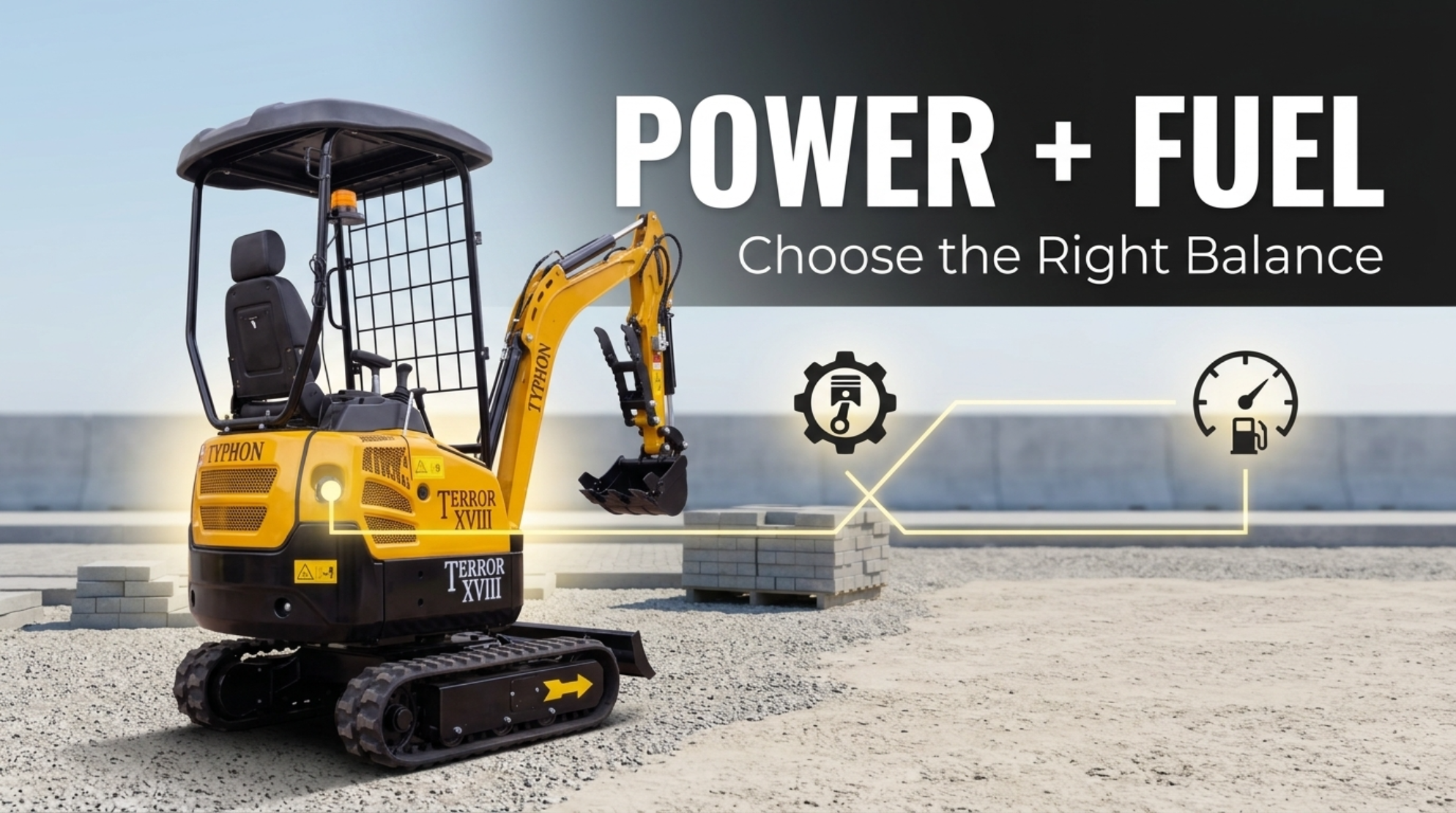
Why Engine Power and Fuel Capacity Should Be Considered Together in an Excavator
When people compare excavators, they often zero in on a single number. Sometimes it’s engine power, and sometimes it’s fuel tank size. Focusing on one while ignoring the other leads to a common mistake: choosing equipment that either burns through fuel too quickly or lacks the muscle to handle the work. These two specifications are deeply connected, and understanding how they interact tells you far more about an excavator’s real capability than either figure alone.
Engine power shapes what an excavator can accomplish, while fuel capacity influences how long it can keep going. Look at them together and you get a clearer picture of productivity, running costs, and how well the machine fits your daily demands. Ignore the relationship, and you risk frequent refueling stops, higher fuel bills, or underpowered performance that slows the whole job down.
This post explains what each specification means, how engine power affects fuel consumption, and why tank size alone doesn’t determine runtime. You’ll also learn how to balance power against efficiency and how to choose the right combination for your workload and jobsite. By the end, you’ll be equipped to evaluate excavators as complete working systems rather than collections of standalone specs.
What Engine Power and Fuel Capacity Mean on an Excavator
Engine power describes how much work an excavator can perform. It reflects the machine’s ability to dig, lift, push, or drive attachments under load, and it usually determines how confidently the excavator handles demanding tasks. An excavator with ample power completes tough jobs without straining, while an underpowered unit struggles, slows down, and wears itself out trying to keep pace.
Fuel capacity, on the other hand, tells you how long the excavator can operate before it needs refueling. It’s the size of the tank, measured in the volume of fuel it holds. On its own, capacity sounds simple, but it plays a major role in how the excavator fits into a shift, especially when refueling is inconvenient or the work runs long.
Looking at both specifications together gives a far better understanding of overall working capability. Consider what each one actually reveals:
- Engine power: the strength available for digging, lifting, pushing, and driving attachments
- Fuel capacity: the volume of fuel the excavator carries between refueling stops
- Combined view: how much work the machine can do and how long it can sustain that output
The connection matters because power and endurance are two halves of the same equation. A powerful excavator that empties its tank quickly may need constant refueling, interrupting productive work. An excavator with a large tank but modest power may run all day yet fall short on tough tasks. Neither specification means much in isolation. Only when you weigh them together do you see whether an excavator can genuinely deliver the performance and the operating time your work requires. That combined perspective is the foundation of a smart equipment decision.
How Engine Power Affects Excavator Fuel Consumption
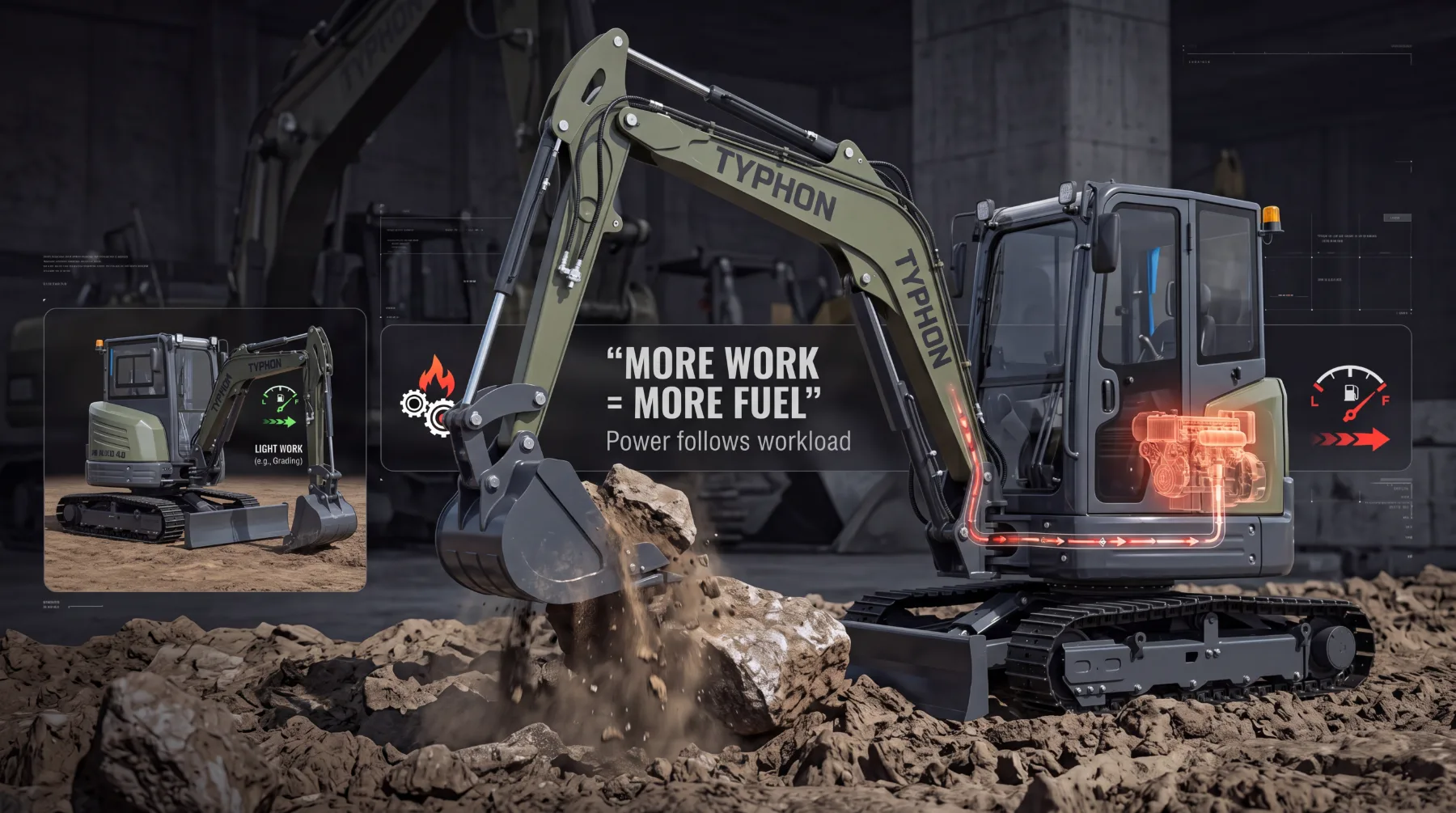
Engine power and fuel consumption are closely linked, though the relationship isn’t as simple as “more power means more fuel.” Higher engine power supports demanding excavator tasks that a weaker engine couldn’t manage, and that capability is genuinely valuable when the work is heavy. However, when a powerful engine works hard under heavy load, it naturally draws more fuel to deliver that output.
The key insight is that fuel use tracks the workload, not just the engine’s rated power. An excavator engine running at a fraction of its capacity on light tasks consumes far less than the same engine pushed to its limits during heavy digging or lifting cycles. This is why two identical excavators can post very different fuel figures depending on how hard each one works throughout a shift. Power sets the ceiling for what the machine can do; the actual demand placed on it sets the fuel bill.
Several factors shape real-world fuel consumption in an excavator:
- Workload: heavier, continuous digging and lifting draws more fuel than light or intermittent work
- Operating conditions: slopes, soft ground, and tough materials increase demand
- Engine efficiency: modern excavator engines deliver more work per unit of fuel
- Machine design: hydraulics, drivetrain, and weight all influence consumption
Efficiency deserves special attention. A well-engineered excavator engine can produce strong power while using fuel more economically than an older or poorly matched design. This means high power and reasonable fuel consumption aren’t mutually exclusive when the excavator is built thoughtfully. The practical takeaway is straightforward: don’t assume a powerful excavator will always be thirsty, and don’t assume a smaller engine will always save fuel. What matters is how the engine’s power matches the work, and how efficiently the excavator converts fuel into productive output across the conditions you actually face.
Fuel Capacity and Excavator Operating Time
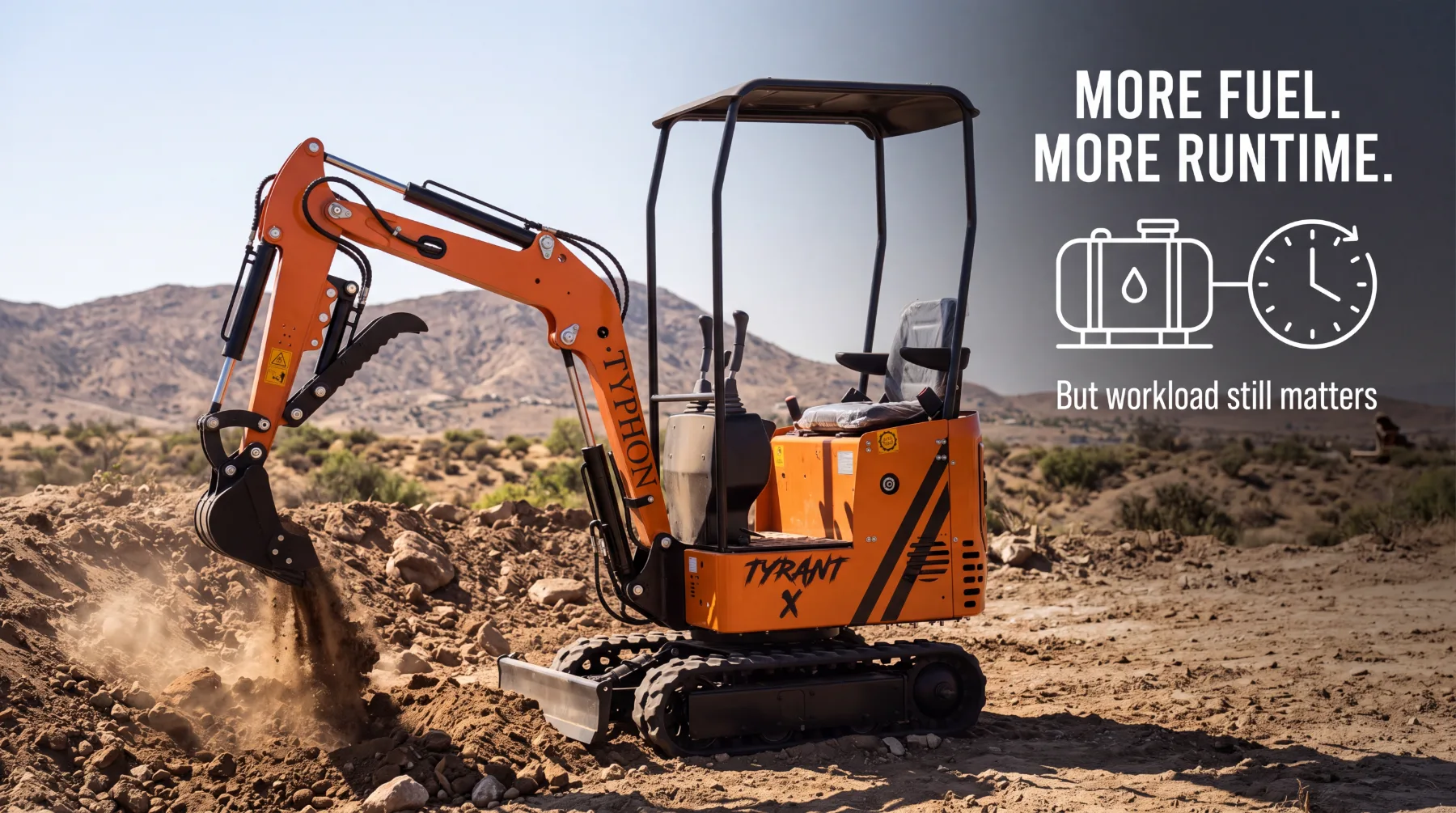
Fuel capacity has an obvious appeal: a larger tank can extend the time between refueling stops. That extra runtime proves genuinely valuable during long shifts, on remote jobsites, or in any situation where stopping to refuel disrupts the excavator’s workflow. When an excavator can run through a full shift without pausing to top off, operators stay focused and productivity holds steady.
Remote and hard-to-access sites make this advantage even clearer. Hauling fuel to a distant location, or moving an excavator back to a fueling point, costs time and effort. A generous tank reduces how often that happens, keeping the crew productive and the schedule on track. For operations that run extended hours, the convenience of fewer refueling interruptions can be a real competitive edge.
Still, tank size alone does not determine how long an excavator will run. Runtime depends on the balance between fuel capacity and fuel consumption, and consumption varies with engine load. Consider how these factors interact:
- Large tank, heavy load: more fuel available, but faster consumption shortens runtime
- Large tank, light load: extended operation with fewer stops
- Smaller tank, efficient use: may still deliver solid runtime on lighter excavator tasks
This is why comparing tank sizes without considering workload can mislead you. An excavator with a big tank that burns fuel quickly during heavy digging might offer less practical runtime than a more efficient machine with a smaller tank. The honest measure of operating time is how long the excavator works under your actual conditions, not simply how much fuel it holds. When you evaluate capacity, always pair it with a realistic view of how hard the excavator will work. That combined perspective tells you whether the tank size truly delivers the endurance your shifts demand.
Balancing Excavator Power and Fuel Efficiency
The goal in selecting an excavator isn’t to chase the highest engine power or the largest fuel tank. Extremes rarely serve you well. Too much power for the task adds cost and can waste fuel, while an oversized tank adds weight and expense without solving the real challenge of matching performance to the work. The smarter aim is balance: a well-matched combination that delivers enough power for the job while keeping fuel consumption and operating time practical.
Balance means the excavator has the strength to handle its intended work without straining, paired with fuel economy and capacity that support a full, productive shift. An excavator tuned this way completes tasks efficiently and runs long enough to keep interruptions to a minimum. It avoids the twin traps of underperformance and excessive running costs, giving you dependable value day after day.
Reaching that balance depends on understanding your work honestly. A few principles help guide the decision:
- Match power to the task: enough capability for demanding excavation work, without excess
- Weigh efficiency alongside power: favor designs that deliver strong output economically
- Size the tank to the shift: enough capacity for your typical hours and access conditions
The payoff of a balanced excavator shows up in everyday operation. It gets the work done without laboring, sips fuel sensibly relative to its output, and runs long enough to fit your schedule. That combination protects your budget while keeping productivity high. Rather than fixating on a single impressive number, look at how power, efficiency, and capacity work together. An excavator built around that balance delivers reliable performance and sensible operating costs, which is exactly what dependable equipment should provide.
Choosing the Right Excavator Power and Fuel Combination for the Job
Selecting the right excavator comes down to weighing several factors together rather than in isolation. Engine power, fuel capacity, expected workload, operating hours, and jobsite conditions all shape the decision, and they influence one another. Considering them as a group ensures the excavator has the performance you need without creating unnecessary fuel costs or frequent refueling interruptions.
Start with an honest assessment of the work. Determine how demanding your typical excavator tasks are, since heavier, continuous digging and lifting calls for more power and will consume fuel faster. Then factor in your operating hours: long shifts or remote sites benefit from greater fuel capacity, while shorter, accessible jobs place fewer demands on the tank. Jobsite conditions matter too, because rough terrain, slopes, and tough materials raise both power requirements and fuel use.
A practical routine helps translate these factors into a confident choice:
- Define the workload: identify how heavy and continuous your typical excavation tasks are
- Estimate operating hours: account for shift length and refueling access
- Assess jobsite conditions: factor in terrain, materials, and demands on the engine
- Match power to demand: choose enough capability without paying for excess
- Size fuel capacity to the shift: ensure practical runtime between stops
When these elements align, the excavator delivers sufficient performance while keeping running costs and refueling stops in check. It has the power to handle the work, the efficiency to control fuel spending, and the capacity to sustain your hours. That coordinated fit is what separates an excavator that merely looks capable on paper from one that genuinely performs on your site. By evaluating power and fuel capacity together, alongside your real workload and conditions, you invest in an excavator that earns its keep shift after shift.
Conclusion
Engine power and fuel capacity tell only part of the story when viewed separately. Power determines how much work an excavator can perform, while fuel capacity shapes how long it can keep going, and the two are inseparable in practice. A powerful excavator that drains its tank quickly may face constant refueling, while a large tank paired with modest power may run all day yet fall short on tough digging tasks. Fuel consumption tracks the workload, so real runtime always depends on how hard the excavator works, not tank size alone. The goal is balance: enough power for the job, sensible fuel economy, and capacity matched to your shift. Weigh engine power, fuel capacity, workload, operating hours, and jobsite conditions together, and you’ll choose an excavator that performs reliably without unnecessary fuel costs or interruptions. Review your typical tasks and conditions, then match an excavator to that reality for dependable, cost-effective results.
Frequently Asked Questions
1. Why should engine power and fuel capacity be considered together on an excavator?
Engine power and fuel capacity address two different questions: how much work an excavator can do, and how long it can operate before refueling. Looking at either one alone gives an incomplete picture. A powerful excavator with a small tank may need frequent refueling, while a large tank paired with weak power may run long but struggle on demanding digging tasks. Because fuel consumption depends on how hard the excavator engine works, power and capacity directly influence each other. Evaluating them together reveals the excavator’s true working capability, helping you judge both its performance and its practical operating time under real conditions.
2. Does higher engine power always mean higher fuel consumption in an excavator?
Not necessarily. Higher engine power supports more demanding excavator tasks, and when the engine works hard under heavy load, it does draw more fuel. However, actual fuel use depends on the workload rather than the rated power alone. An excavator engine running light tasks consumes far less than the same engine pushed to its limits during heavy digging cycles. Engine efficiency and machine design also play major roles, since a well-engineered excavator engine can deliver strong power while using fuel economically. This means high power and reasonable fuel consumption can coexist. What matters most is how well the power matches the work and how efficiently the excavator converts fuel into output.
3. Does a larger fuel tank guarantee longer operating time for an excavator?
No. A larger tank can extend the time between refueling stops, which is valuable on long shifts or remote jobsites. But tank size alone does not determine runtime, because fuel consumption varies with engine load. A large tank on an excavator that burns fuel quickly during heavy digging may deliver less practical runtime than a more efficient machine with a smaller tank. The honest measure of operating time is how long the excavator runs under your actual conditions, not simply how much fuel it holds. Always pair tank capacity with a realistic view of your workload to judge true endurance.
4. How do I balance excavator engine power against fuel efficiency?
Balance starts with matching power to your actual excavation work rather than chasing the highest number. Choose enough power to handle your demanding tasks without straining, but avoid excess capability that adds cost and can waste fuel. Favor excavators with efficient engine and hydraulic designs, since these deliver strong output while using fuel economically. Then size the fuel tank to your typical shift length and refueling access. A well-matched excavator completes work efficiently, controls fuel spending, and runs long enough to minimize interruptions. The result is dependable performance and sensible operating costs, which serve you far better than any single impressive specification.
5. What factors should I weigh when choosing the right excavator power and fuel combination?
Consider engine power, fuel capacity, expected workload, operating hours, and jobsite conditions together. Begin by defining how heavy and continuous your typical excavation tasks are, since demanding digging and lifting requires more power and consumes fuel faster. Estimate your operating hours and refueling access, because long shifts or remote sites benefit from greater capacity. Assess jobsite conditions like terrain and materials, which raise both power needs and fuel use. Then match power to your real demand and size the tank to your shift. When these factors align, the excavator delivers sufficient performance without unnecessary fuel costs or frequent refueling stops, giving you reliable value day after day.