Currently Empty: $0.00

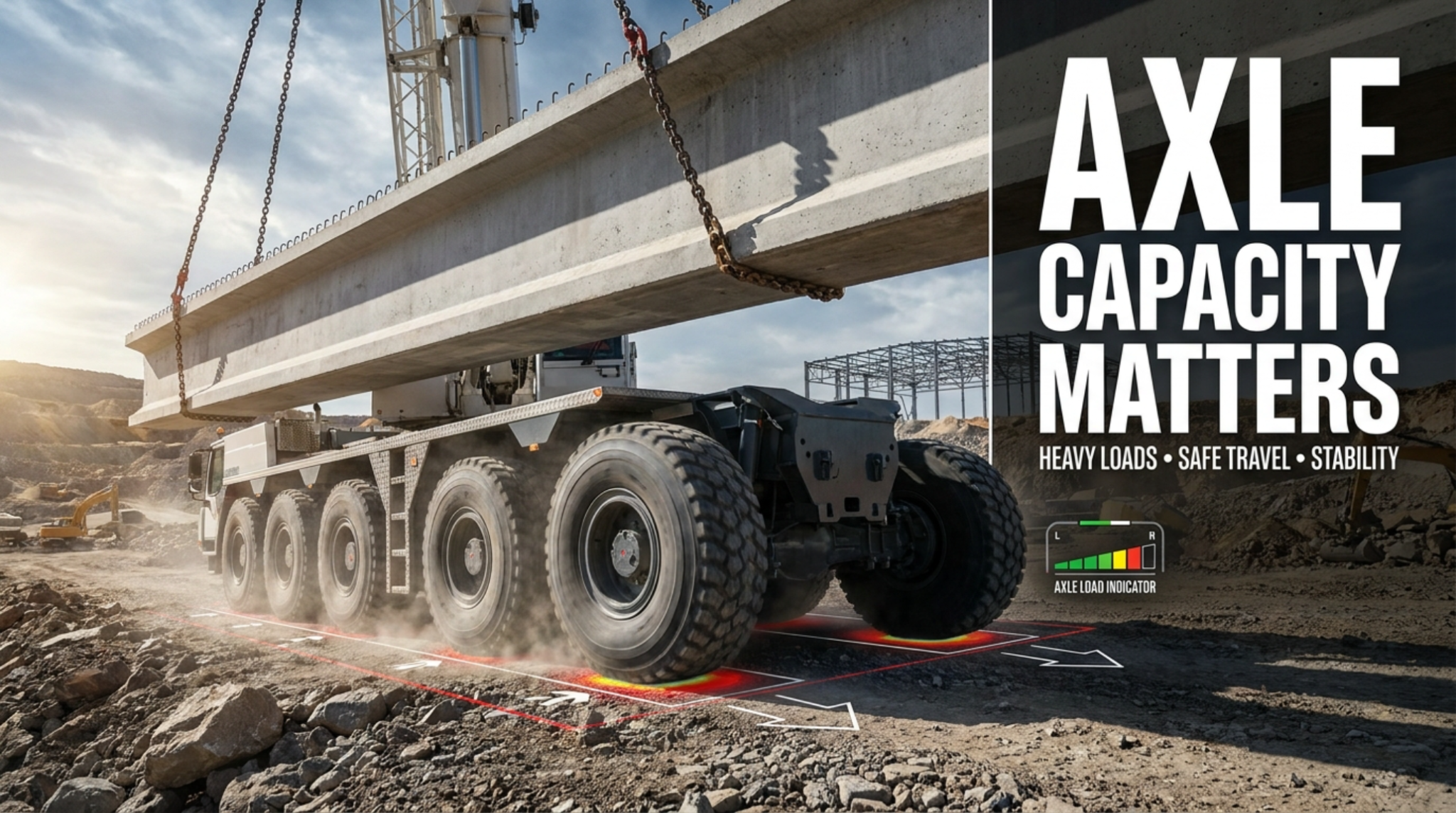
Why Mobile Crane Axle Capacity Matters When Carrying Heavy Loads
Axle capacity rarely makes the headlines when buyers compare mobile cranes, yet it quietly decides whether a machine can travel safely with the load it carries. A crane is not only a lifting tool. It is also a heavy vehicle that must move itself, its equipment, and its load across roads and job sites without overstressing the parts that bear all that weight. When axle capacity is matched to the task, the crane travels safely and handles predictably. When it falls short, the risks build quickly, from worn tires to unstable travel. This guide explains why axle capacity matters when carrying heavy loads, so you can judge a mobile crane by what keeps it safe on the move.
How Axle Capacity Supports Heavy Load Transport
Axle capacity is the foundation of safe heavy load transport, because every axle on a mobile crane must carry its share of the machine’s total weight along with the load being moved. A crane is a substantial vehicle even before it picks anything up, combining the weight of the chassis, engine, cab, counterweight, boom, and outrigger gear. Add a heavy load to that, and the axles carry an enormous combined burden. Each axle is rated for a specific maximum weight, and staying within that rating is what keeps the machine sound as it travels.
Proper axle capacity does more than hold the weight. It protects the components that depend on the axle to spread and manage that load. When each axle carries only what it is rated for, the stress passing through the machine’s running gear stays within safe limits, which preserves both performance and durability over the long term.
The components that benefit from correct axle capacity include:
- Tires that carry the direct contact load and wear evenly when not overburdened.
- Suspension that absorbs road and site conditions without being pushed past its limits.
- Wheels and axle components that bear the structural stress of the combined weight.
When capacity is matched to the demands placed on it, the crane transports heavy loads without excessive stress building anywhere in the system. That balance is what allows the machine to move dependably day after day rather than accumulating wear that leads to failure. For anyone responsible for a mobile crane, understanding axle capacity is the starting point for safe transport, because it defines how much the machine can carry across each axle before the components that keep it rolling begin to suffer. Respecting that limit protects the crane, the load, and everyone working around it.
The Relationship Between Load Weight and Axle Load
It is tempting to assume that a crane’s weight and its load spread evenly across every axle, but that is rarely how the numbers work out. A heavy crane load does not always distribute equally, and the amount of weight each axle carries can change considerably depending on how the machine is set up and what it is transporting. Understanding this relationship is essential, because an axle can be overloaded even when the crane’s total weight appears to sit within limits.
Several factors influence how weight lands on each axle. Load position plays a major role, since a load carried toward the front or rear shifts more weight onto the axles nearest to it. Boom configuration matters too, because the boom is heavy and its position changes the machine’s balance. A boom carried in one arrangement loads the axles differently than the same boom carried another way. The crane’s overall design also determines how weight naturally distributes across the axle group.
Consider how these elements shape axle load during transport:
- Load position shifts weight toward the axles closest to where the load sits.
- Boom configuration changes the machine’s balance and the load on individual axles.
- Crane design sets how weight is spread across the axle arrangement by default.
Because of this uneven distribution, checking the total weight alone is not enough to confirm safe transport. An axle bearing more than its share can exceed its rating while the combined figure still looks acceptable, which is a hidden risk that careful operators plan around. The dependable approach is to understand how your specific crane distributes weight in its transport configuration and to confirm that no single axle is overloaded. Knowing where the weight actually falls, rather than assuming it spreads evenly, is what keeps heavy load transport genuinely safe.
Why Overloading an Axle Creates Safety Risks
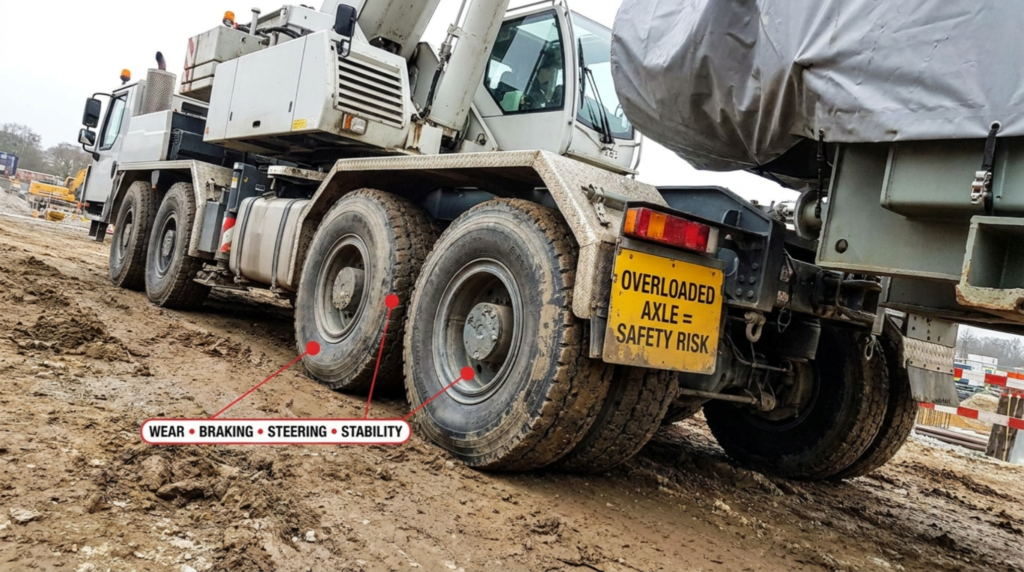
Exceeding an axle’s rated capacity is not a minor overstep that the machine simply absorbs. It introduces real safety risks that grow more serious the further the limit is pushed. When an axle carries more than it was designed to handle, the effects ripple through the systems that keep the crane controllable on the move, compromising the machine’s safety in several ways at once.
The consequences of overloading an axle show up across the running gear and handling:
- Increased tire wear as tires bear more weight than they are rated for, wearing faster and risking failure.
- Higher braking demands as the extra weight requires more effort to slow and stop the machine safely.
- Steering difficulty as an overloaded axle changes how the crane responds to steering input.
- Mechanical stress on wheels, suspension, and axle components that accelerates wear and can lead to failure.
Each of these effects is dangerous in its own right, and together they undermine the operator’s control over a very heavy machine. Overworked tires can fail without warning, and a blowout on a loaded crane is a serious hazard. Brakes strained beyond their intended load take longer to stop the machine, which matters greatly when traveling with a heavy load. Compromised steering makes the crane harder to guide precisely, and mounting mechanical stress raises the chance of a component giving way at the worst possible moment.
Overloading can also reduce the crane’s stability while traveling. A machine carrying uneven or excessive axle loads may handle unpredictably, especially on turns, slopes, or uneven ground. That loss of stability turns routine travel into a genuine hazard. For these reasons, respecting axle capacity is not optional caution but a core safety requirement. Keeping every axle within its rating protects the tires, brakes, steering, and structure that the operator relies on to move the crane safely, which is exactly why overloading can never be treated as an acceptable shortcut.
How Axle Capacity Affects Crane Mobility
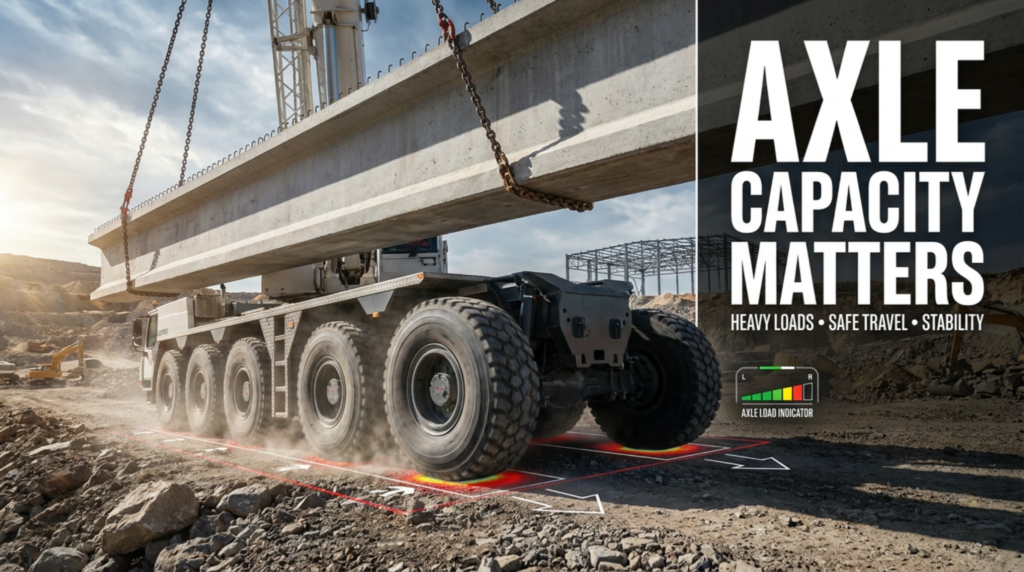
Mobility is one of the defining advantages of a mobile crane, and axle capacity is central to delivering it. Adequate capacity allows the machine to travel safely across public roads, into construction sites, and over the uneven surfaces it often encounters, all while carrying the equipment and load the job requires. Without enough axle capacity to support that weight, the crane’s ability to move safely and confidently is compromised, and its greatest strength becomes a liability.
The connection between capacity and mobility runs through every kind of surface the crane meets. On public roads, the machine must travel at speed and comply with weight limits, and axles rated for the load keep that travel safe and lawful. On construction sites, the ground is frequently rough, soft, or uneven, which places extra demands on the axles and the running gear. Capacity matched to those conditions lets the crane handle them without overstressing its components.
Adequate axle capacity supports mobility in ways that matter day to day:
- Safe road travel while carrying required equipment within weight limits.
- Confident site movement across rough and uneven ground without overloading axles.
- Predictable handling that keeps the machine controllable in varied conditions.
Predictable handling is perhaps the most important benefit. A crane whose axles comfortably support its weight responds consistently to steering, braking, and acceleration, so the operator always knows how the machine will behave. When capacity is marginal, handling becomes uncertain, particularly as conditions change from smooth pavement to broken ground. That unpredictability makes the machine harder and riskier to operate. By ensuring the axles can carry the load across every surface the job demands, a well-specified crane preserves the dependable mobility that makes it so valuable, moving safely and predictably wherever the work takes it.
Choosing a Mobile Crane With the Right Axle Rating
Selecting a mobile crane with the correct axle rating means looking at axle capacity as part of a larger picture rather than a figure in isolation. Axle capacity should be weighed alongside the crane’s gross vehicle weight, its rated load, the wheel configuration, and the transportation requirements the machine must meet. When these specifications align, you get a crane that can carry heavy loads without exceeding its structural limits, which is the outcome every buyer should be aiming for.
Each of these specifications relates to the others in important ways. Gross vehicle weight tells you the total the machine and its equipment weigh, which the axles collectively must support. Rated load defines how much the crane is built to handle, and that weight must travel safely across the axles during transport. Wheel configuration, meaning the number and arrangement of axles and wheels, determines how the total weight is spread and how much capacity is available overall. Transportation requirements, including road weight limits and the conditions of the sites served, set the practical demands the machine must satisfy.
When evaluating a crane, keep these specifications in view together:
- Gross vehicle weight that the axles must support as a combined group.
- Rated load that must travel safely within the axle capacity available.
- Wheel configuration that spreads weight across the axle arrangement.
- Transportation requirements such as road limits and site conditions.
Matching these specifications is what ensures the crane performs safely across its full range of work. A machine with more axles or a configuration suited to heavy transport spreads weight more effectively and carries loads that a lighter arrangement could not manage safely. The dependable approach is to define the loads you need to move and the conditions you operate in, then choose a crane whose axle rating and wheel configuration meet those demands with a sensible margin. Choosing with all these factors in mind gives you a machine that carries heavy loads confidently, stays within its structural limits, and delivers the safe, reliable service that demanding crane work requires.
Conclusion
Axle capacity is a defining factor in how safely a mobile crane carries heavy loads, even though it seldom gets the attention that lifting figures do. Each axle must support its share of the crane’s weight and its load, and that weight rarely spreads evenly, since load position and boom configuration shift the balance. Overloading an axle brings real risks, from accelerated tire wear and greater braking demands to compromised steering and reduced stability. Adequate capacity, by contrast, keeps the machine mobile and predictable across roads and rough sites alike. The right choice comes from weighing axle capacity together with gross vehicle weight, rated load, wheel configuration, and transportation needs. Match these carefully, and your crane will carry heavy loads safely and dependably wherever the work leads.
Frequently Asked Questions
1. What is axle capacity on a mobile crane and why does it matter?
Axle capacity is the maximum weight a single axle is rated to carry safely, and it matters because a mobile crane must transport its own considerable weight along with the load it carries. The machine combines the chassis, engine, cab, counterweight, boom, and outrigger gear, and each axle bears a share of that combined weight. Staying within each axle’s rating keeps the tires, suspension, wheels, and axle components within safe stress limits, which protects both performance and durability. When capacity is respected, the crane transports heavy loads dependably without accumulating the wear that leads to failure. Because the crane is a heavy vehicle as well as a lifting tool, axle capacity is the foundation of safe transport.
2. Does a crane’s weight spread evenly across all its axles?
No, and assuming it does can be a costly mistake. A heavy crane load rarely distributes equally across every axle, so one axle can be overloaded even when the total weight appears within limits. Several factors change how weight lands on each axle. Load position shifts more weight onto the axles nearest the load, boom configuration alters the machine’s balance because the boom is heavy, and the crane’s overall design determines how weight naturally spreads across the axle group. This is why checking the combined weight alone is not enough. The safe approach is to understand how your specific crane distributes weight in its transport configuration and confirm that no single axle exceeds its rating.
3. What happens if you overload a mobile crane’s axle?
Overloading an axle introduces serious safety risks that grow worse the further the rating is exceeded. It increases tire wear, since tires carrying more than their rated weight wear faster and can fail without warning. It raises braking demands, because the extra weight takes more effort to slow and stop. It can make steering more difficult, changing how the crane responds to input, and it places added mechanical stress on wheels, suspension, and axle components, which accelerates wear and can lead to failure. Overloading may also reduce stability while traveling, making the machine handle unpredictably on turns, slopes, or uneven ground. Together these effects undermine the operator’s control, which is why axle limits must always be respected.
4. How does axle capacity affect where a mobile crane can travel?
Axle capacity directly shapes the crane’s mobility across every surface it meets. On public roads, the machine must travel within legal weight limits, and axles rated for the load keep that travel both safe and lawful. On construction sites, the ground is often rough, soft, or uneven, which places extra demands on the axles and running gear, so capacity matched to those conditions lets the crane handle them without overstressing components. Adequate capacity also delivers predictable handling, meaning the crane responds consistently to steering, braking, and acceleration so the operator always knows how it will behave. When capacity is marginal, handling becomes uncertain, especially as conditions change, making the machine harder and riskier to operate.
5. What specifications should I check when choosing a crane for heavy loads?
Axle capacity should be considered alongside several related specifications rather than on its own. Check the gross vehicle weight, which is the total the machine and equipment weigh and which the axles must support together. Review the rated load, since that weight must travel safely across the axles during transport. Look at the wheel configuration, meaning the number and arrangement of axles and wheels, because it determines how weight is spread and how much capacity is available overall. Finally, account for your transportation requirements, including road weight limits and the site conditions you work in. Define the loads you need to move and the conditions you operate in, then choose a crane whose axle rating and configuration meet those demands with a sensible margin.